
Last updated November 15, 2026
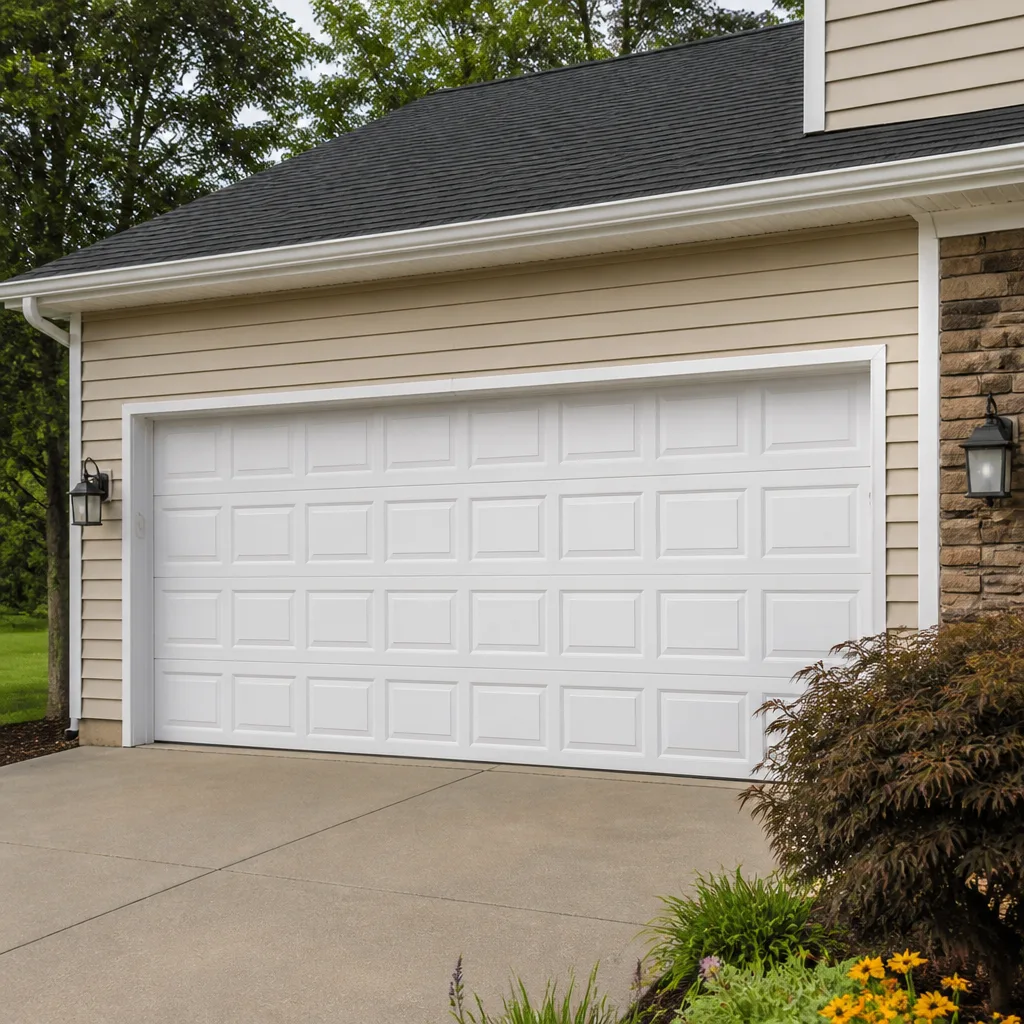 Raised-panel steel
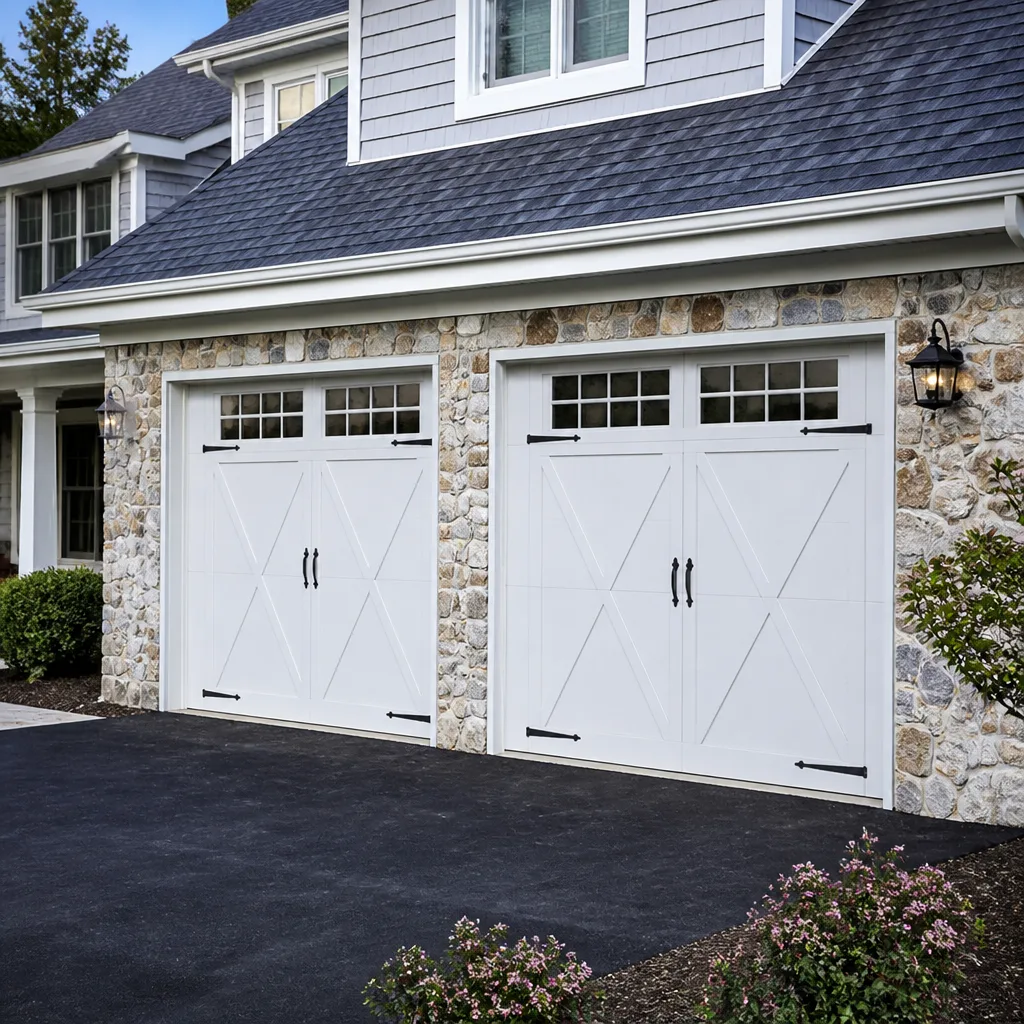 Carriage house
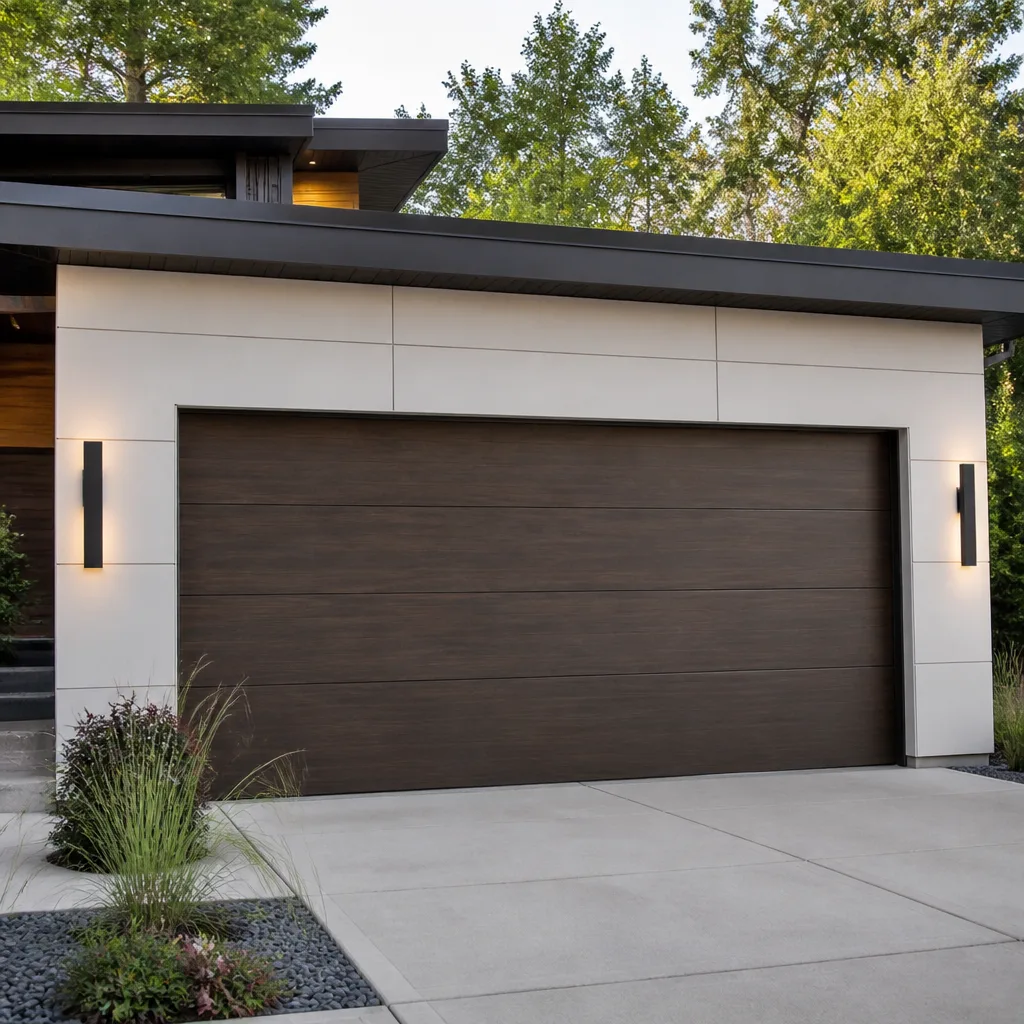 Modern flush
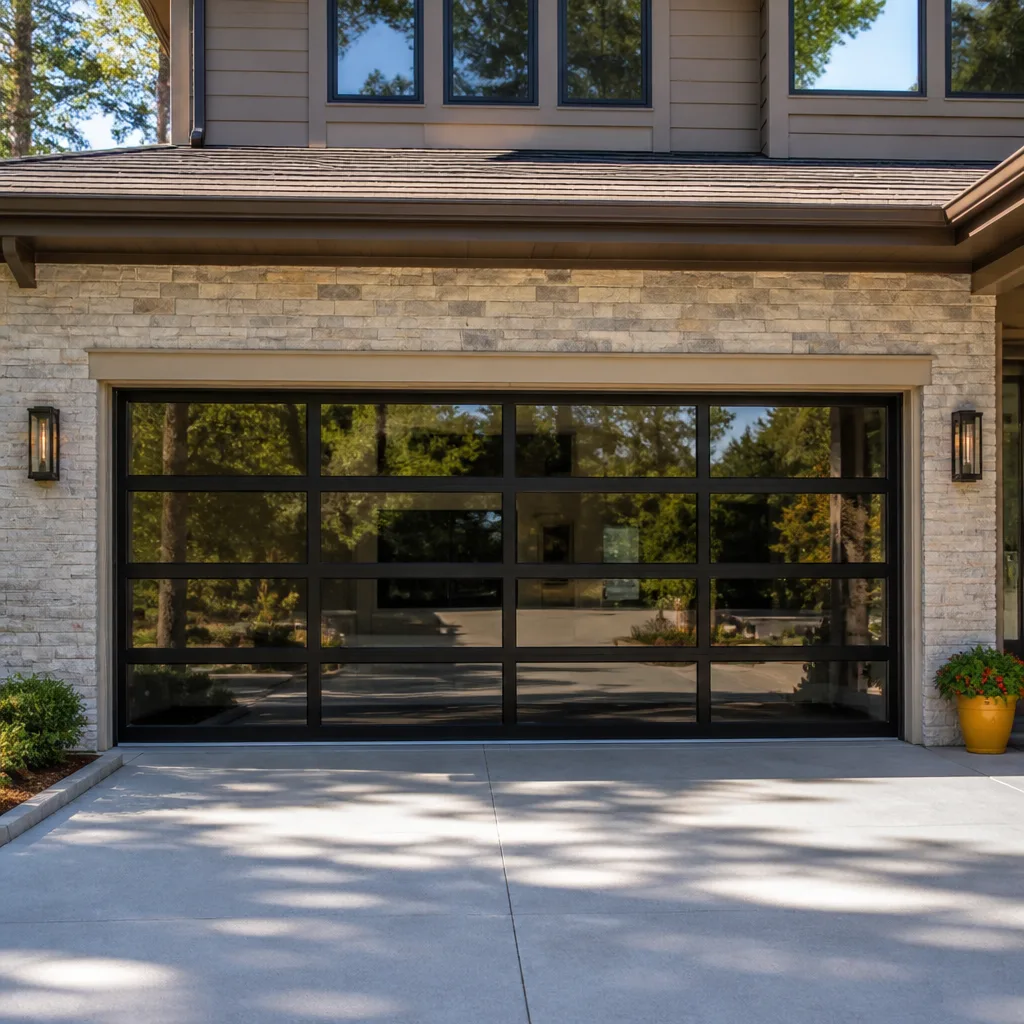 Full-view glass
 LiftMaster openers
 Chamberlain openers
Full 25-point door and opener safety check with every visit - springs, cables, rollers, tracks, and your LiftMaster or Chamberlain opener included
You get a price before we start. It does not change when the pro arrives.
Get your free estimateGarage Door Warning Signs: A Raleigh Homeowner’s Reference Guide
Most garage doors don’t fail without notice. They tell you something’s wrong weeks in advance, and homeowners misread the message because early symptoms feel minor: a small shudder at the halfway point, a sound that wasn’t there last month, a two-second delay before the door moves. Those aren’t signs of a door “getting old.” They’re specific, diagnosable problems – stripped opener gears, a tension imbalance, limit switch drift – each with a different fix and a different cost. This guide maps the symptoms to the causes, so Raleigh homeowners can schedule a repair before it becomes a replacement.
Quick Answer
The five warning signs that mean stop using the door now are: a snapped or visibly stretched spring, a door that hangs unevenly with one side sagging, a bent or detached bottom roller, any sign of a frayed cable at the drum, or an opener that strains audibly and fails to lift. Everything else – grinding, squealing, a slight delay, a remote that works only up close – is a scheduling issue, not a stop-everything issue. If you’re in Raleigh, the single most useful thing you can do is know which category you’re in. This guide walks through both.
Styles & brands we work with
- Raised-panel steel
- Carriage house
- Modern flush
- Full-view glass
- LiftMaster openers
- Chamberlain openers
Table of Contents
- The Sound Index: What Each Noise Actually Means
- Visual Warning Signs: Urgent vs. Scheduled
- The 60-Second Balance Test
- Seasonal Signs in Raleigh That Aren’t Failure
- Five Signs That Mean Stop Using the Door
- Opener Signals Most Homeowners Miss
- Repair or Replace: How to Tell the Difference
- What to Do If You’re Stuck Mid-Cycle
The Sound Index: What Each Noise Actually Means
Garage noise is diagnostic. A technician can usually narrow a fault to two or three suspects just from a description of the sound and where it happens in the cycle. Here’s how that translation works.
Grinding
A grinding sound that starts as the door begins to lift or right as it settles closed usually points to a roller seized in its hinge, or a torsion spring that has lost tension and is forcing the opener to work harder than it should. On chain-drive openers, a light grinding is often the rail itself – the carriage is rubbing because it’s out of alignment. If the grinding is harsh and metallic, and it changes pitch through the cycle, the spring is the more likely culprit.
Squealing
Squealing is nearly always friction. Dry rollers, a dry hinge pin, or a torsion tube that has run out of lubrication will chirp and squeal, particularly in a door that hasn’t moved much. It’s usually the least serious sound on this list, and it’s also the one most often ignored until the same dry hinge strips its pin and stops the door. A Genie or Chamberlain opener adds its own squeal – the drive gear inside the head unit can whine as it wears.
Rattling
Rattling while the door is in motion usually comes from loose hinge bolts, a slack chain on a chain-drive opener, or a door panel that has begun to separate at the section joint. It gets noticeably worse on double-wide doors because there’s more hardware to loosen. If the rattle stops when the door is at rest, hardware is the first thing to check.
Popping
A single loud pop at the start of the lift cycle is the one sound that deserves immediate attention. It’s typically a spring that has already broken inside its coil and is catching as the door begins to move. The pop is the sound of the torsion bar finally slipping. Stop the door and call for service – a broken spring on a door that’s still trying to open can pull the cable off its drum, which is a genuine safety risk.
Visual Warning Signs: Urgent vs. Scheduled
Some warning signs give you a week to schedule a repair. Others give you about an hour. The distinction matters, because homeowners who ignore an urgent sign often end up costing themselves a much larger job. Here’s how to sort them.
Signs that can wait for a scheduled appointment
- A single roller that looks worn smooth or has a visible flat spot
- Hinge screws that have started to back out on one or two sections
- Light rust spotting on the bottom panel – common enough in Raleigh’s humid summers
- Weatherstrip that’s peeling from the bottom edge of the door
- A remote that has to be held longer than it used to, or works only when you’re close
- Visible dents or dings in the panel face that don’t affect operation
Signs that need attention now
- A gap between the coils of a torsion spring (a spring that looks like a slinky separated from itself)
- A cable that’s come loose and hangs slack from the drum on one side
- A door that closes normally but rests visibly lower on one side
- Any door that lifts manually and then sags back down rather than staying put
- A bottom roller that’s cocked sideways or missing from its track
If you’re looking at anything in the second list and you’re in Raleigh, you don’t need to guess which garage door repair is appropriate – the door has already told you. The next section shows how to confirm a spring problem with a two-minute check.
The 60-Second Balance Test
A properly balanced door should support itself at the halfway-open position with the opener out of the equation. That single fact is the most useful diagnostic a homeowner has. Here’s the full sequence – and the one safety limit you must respect.
- Close the door fully. Disconnect the opener by pulling the release handle (the red cord hanging from the carriage).
- Lift the door by hand to the midpoint. Just above waist height. The lower half of the door, not the top edge, is the safe lifting point.
- Let go and step back. The door should stay exactly where you left it, and it should stay there on its own.
- Raise it to shoulder height and let go again. Same expectation – no drift, no sag, no creeping down.
- Lower it back to the midpoint. If it falls more than a few inches toward closed, the springs are under-tensioned. If it rises on its own, they’re over-tensioned.
- Reconnect the opener and run the door once from the remote. If the balance was off, this confirms the symptom in live operation.
The one limit: a balance test tells you whether the springs are wrong. It does not tell you whether the spring itself is broken, and it’s no substitute for a technician’s visual check. Torsion springs are under enormous stored tension – they’re one of the few parts of a garage door that can seriously injure someone who tries to adjust them. Do not attempt any adjustment or removal. If the door fails the balance test, that’s what you call out.
Balance problems are also the most common source of the misdiagnosis we see most often: a homeowner assumes the opener is failing when it’s actually the door pulling hard. A weak opener masks a tension problem until the day it can’t.
Seasonal Signs in Raleigh That Aren’t Failure
Some of what looks like a new warning sign appears at the same time every year in Raleigh, and it isn’t a mechanical fault. Knowing the difference keeps you from booking a repair on a door that’s behaving normally.
Summer swelling and tightness
Raleigh’s summer humidity is a real player in garage doors, particularly on wood-panel doors. Wood absorbs moisture and expands slightly, and a door that ran smoothly through spring can start to feel tight in July. Panels can bind in the track because each section has grown a fraction of an inch. The fix is a track adjustment, not panel replacement – the door hasn’t failed, it’s just swollen.
Winter contraction and rattling
Cold snaps shrink metal rail and loosen hinge bolts that were fine in warm weather. A door that rattles only in January is usually just hardware that has backed off in the cold. Re-tightening is a scheduled job, not an emergency. Grease that hardened in last year’s cold may also need a refresh.
Pollen and salt-free spring debris
Raleigh’s spring pollen season is one of the heaviest in the country, and the layer that settles in your tracks each spring acts like a mild abrasive on the rollers. If the door gets noisy every April, clean the tracks, sweep them out with a dry rag, and check the rollers before assuming anything’s broken. It’s maintenance, not repair.
Light rust spotting
Central North Carolina’s humid stretches make light surface rust common on steel doors, especially near the bottom panel where moisture collects. Spot rust is a seasonal touch-up, not a structural warning. A coating of the manufacturer’s recommended touch-up on new spots will keep it from spreading.
None of these need same-day service. If you’re uncertain whether you’re looking at maintenance or a developing problem, a garage door repair visit will sort it out quickly and keep you from making the mistake of ignoring real symptoms because you saw them last spring too.
Five Signs That Mean Stop Using the Door
There is a category of problem where running the door risks damaging more than the door itself. In our experience, homeowners who keep cycling a door with any of these five conditions usually end up replacing parts that a single repair visit would have saved. Stop, disconnect the opener, and leave the door where it is.
- A visibly broken or sagging spring. If one torsion spring has snapped, the other is carrying the whole load. Running the door on one spring will overstress the remaining spring and the cables.
- A door hanging unevenly. A sag on one side means the springs or cables are mismatched. Continuing to operate the door pulls the cables further off their drums.
- A cable that’s visibly frayed, slack, or off its drum. Cables are what stop the door if the opener fails. One that’s hanging loose is not holding anything.
- A bent bottom roller or a rolled-out track. The door will force itself through the damaged track and bend the panel behind it.
- An opener that strains to lift but won’t complete the cycle. Every cycle the opener motor forces against a fault it can’t overcome, which is how a small spring problem becomes an opener problem.
If any of these describes your door, disconnect the opener by pulling the release handle, and keep the door closed until a technician looks at it. You can call Orchard Garage Door Repair at (866) 942-6232. We answer 24/7, with fast dispatch from 7am to 7pm, Sunday through Friday, and an estimate on the repair before any work starts.
Opener Signals Most Homeowners Miss
Your opener is the brain of the system, and its warning signs are quieter than the door’s. LiftMaster, Chamberlain, Genie, and Craftsman units all share a handful of failure modes, and each one shows up first as something you’d dismiss as “just how it works now.”
A delay before the door moves
A two-second pause between pressing the remote and the door responding is the single most misread signal in the trade. It isn’t the opener getting old. It’s usually one of three things: stripped drive gears inside the head unit, a limit switch that has drifted out of position, or a tension imbalance in the door itself pulling against a correctly-functioning motor. The fix differs in each case – a new gear set, a re-set limit switch, or a spring adjustment – and the cost differs too. This is one of the reasons we treat garage door opener repair as its own specialty rather than an add-on to door work.
Lights that blink instead of lifting
If the opener’s light flashes several times and the door doesn’t move, the opener is trying to tell you something. On a LiftMaster or Chamberlain unit, a specific blink pattern usually points to a safety sensor that’s misaligned. It’s often a leaf caught in front of the sensor, or a sensor knocked off-kilter by a car. That’s a five-minute check, not a repair.
Reverse that starts partway down
If the door starts down and reverses before it reaches the floor, the opener has detected resistance. That could be a door-side issue (a jammed roller, debris in the track) or an opener-side issue (a worn force setting). It’s worth a professional look either way, because the door is doing this to protect whoever might be underneath it.
Something burned out in the head unit
If the opener hums and skips, or runs but doesn’t move the door, the motor can be running while the gear or capacitor has failed. These are bench-tested repairs on most major brands, not full-unit replacements. Knowing the brand matters here – a Genie drive system is diagnosed differently from a Chamberlain belt drive, and the technician should know that before they arrive.
Repair or Replace: How to Tell the Difference
The honest answer to “do I repair or replace?” depends on the door less than most homeowners expect. It depends on the age of the door in cycles, the number of systems that are failing at once, and whether the door is already a poor match for the house. Here’s how to think about it.
Leaning toward repair
- One system is failing – springs, opener, or rollers – and the rest is sound
- The door panels run straight and the tracks are true
- The warning sign you’ve noticed is new
- The opener is a major brand still in production (parts are available for LiftMaster, Chamberlain, Genie, and Clopay units in most cases)
Leaning toward replacement
- Springs have been replaced once and the door is now on its second set
- The opener has failed and is also the wrong size for the door
- Panels have separated or water has gotten to the core
- Multiple systems are failing at the same time
Brand familiarity matters more here than homeowners expect. Clopay and Amarr doors, for example, have distinct panel construction that changes how a repair is done and how much replacement a repair can cover. A repair on a Clopay door is a very different scope of work from a repair on a Wayne Dalton. The point isn’t which brand is better – it’s that a technician who knows your door’s brand can tell you honestly which path makes sense for the door you have.
What to Do If You’re Stuck Mid-Cycle
A door stuck halfway open is a tricky situation, because the door is holding itself up on the springs and any attempt to force it risks the cables. Here’s the safe sequence.
- Stop pressing the remote. Every additional cycle stresses the system further.
- Pull the opener’s release handle. The red cord disconnects the opener from the door. The door will stay where it is or settle gently.
- Do not try to lift or lower the door by hand. If the door is hanging or the springs are suspect, the manual pull is where people get hurt.
- Clear anything under the door. Keep kids, pets, and cars out from underneath.
- Call for service. In Raleigh, we can usually get a technician to a stuck door the same day, and never charge extra for it being an emergency.
If the door is stuck open and the house is exposed to weather or the street, that’s the priority. We can walk through the options on the phone so you know what to expect before anyone arrives.
Common Mistakes to Avoid
- Assuming a slow door means a new opener. In our experience, most “slow door” calls turn out to be a door problem putting load on the opener, not an opener nearing failure. A spring adjustment or balance fix resolves them more cheaply than a full opener replacement.
- Lubricating the tracks. Track grease attracts grit, and in Raleigh’s pollen season that grit becomes a grinding paste on your rollers. Tracks are cleaned, not greased. The hinges and rollers are what get lubricated.
- Adjusting the spring tension yourself. Torsion springs store enough energy to break a wrist. There is no safe homeowner version of this job, no matter what a video shows.
- Waiting on a single loud pop. A popped spring is rarely the only problem by the time it’s noticed. Catching it in the first day before it pulls a cable is the difference between a spring replacement and a spring-and-cable job.
- Confusing seasonal tightness with a failing door. A door that binds in July but ran fine in April is swollen from humidity, not broken. Getting a balance test first saves money.
- Buying a new opener without checking the door. If you replace the opener while the springs are wrong, the new unit will struggle from the first day and fail sooner.
- Ignoring a blinking opener light. The flash pattern is usually a specific message – sensor alignment in most cases. Dismissing it lets a small fix become a bigger one.
See the difference
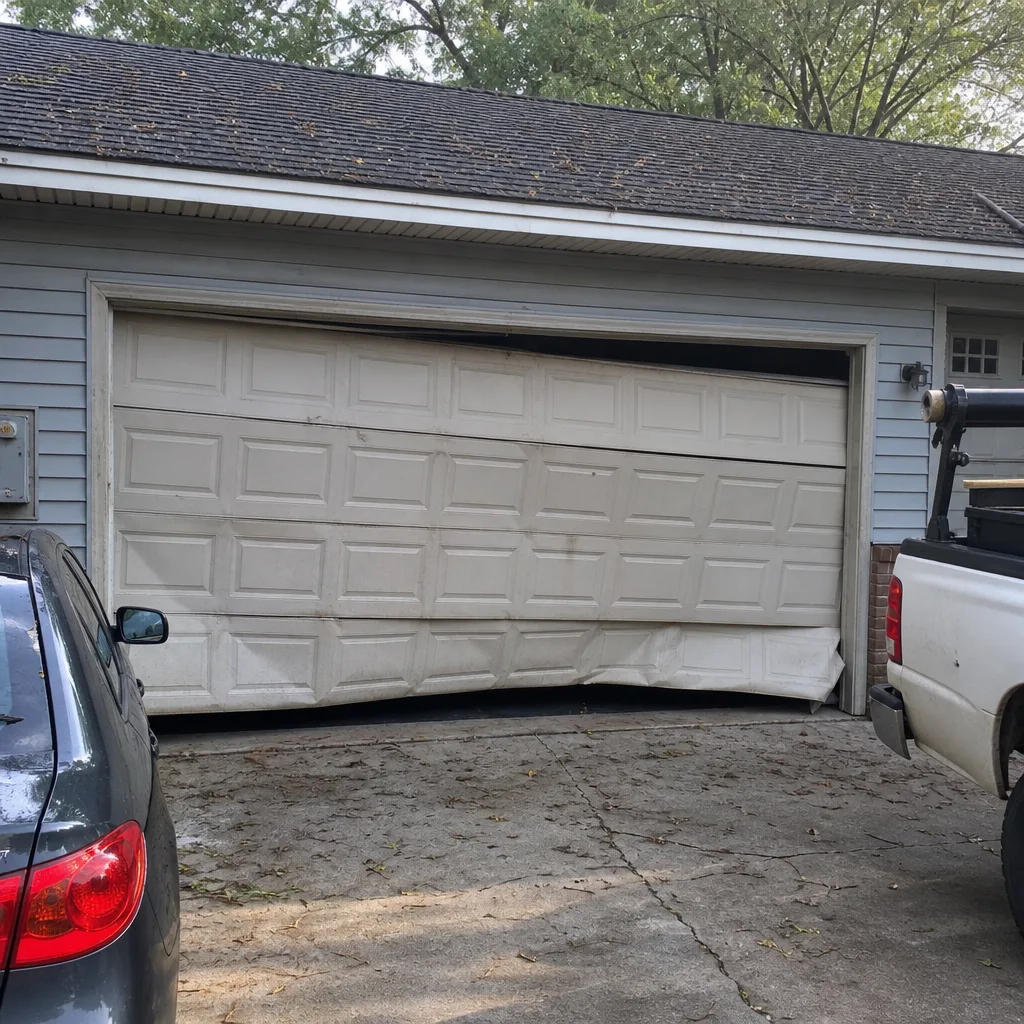 Before
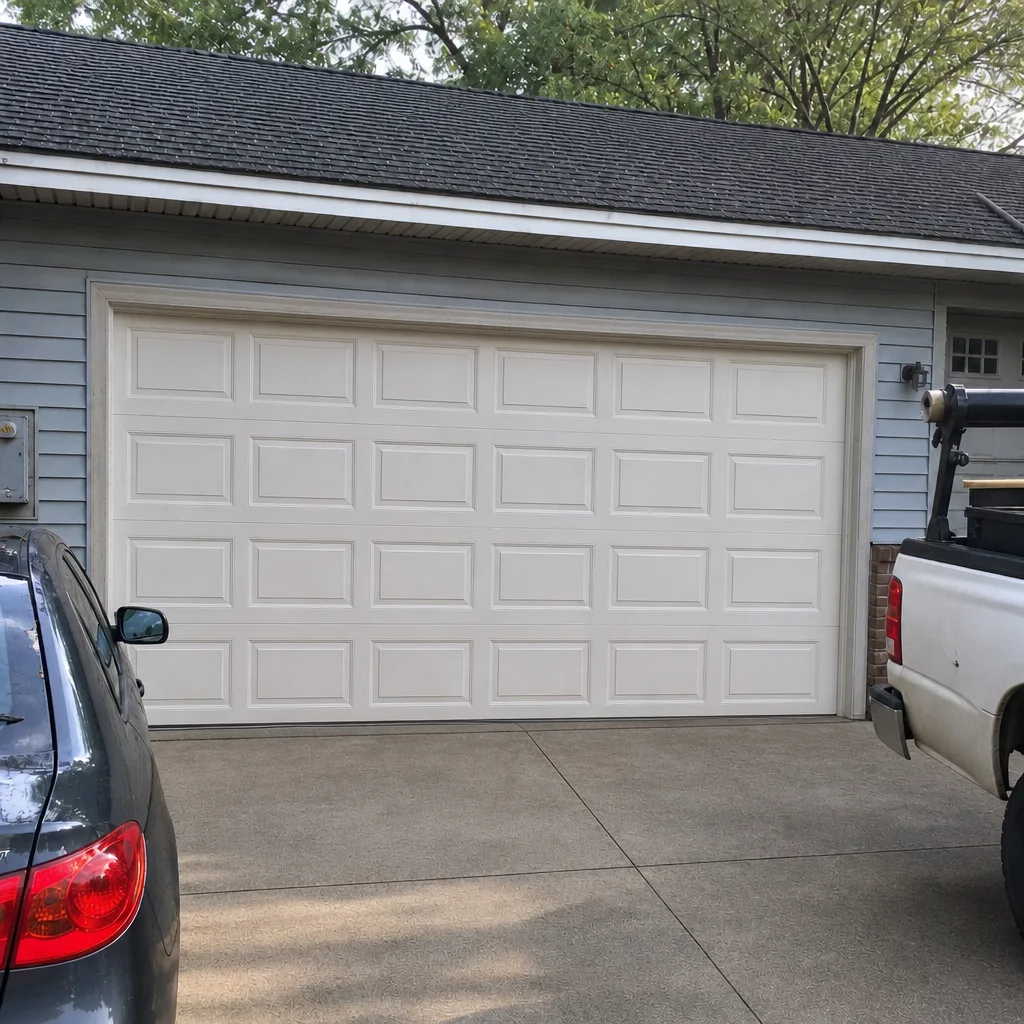 After
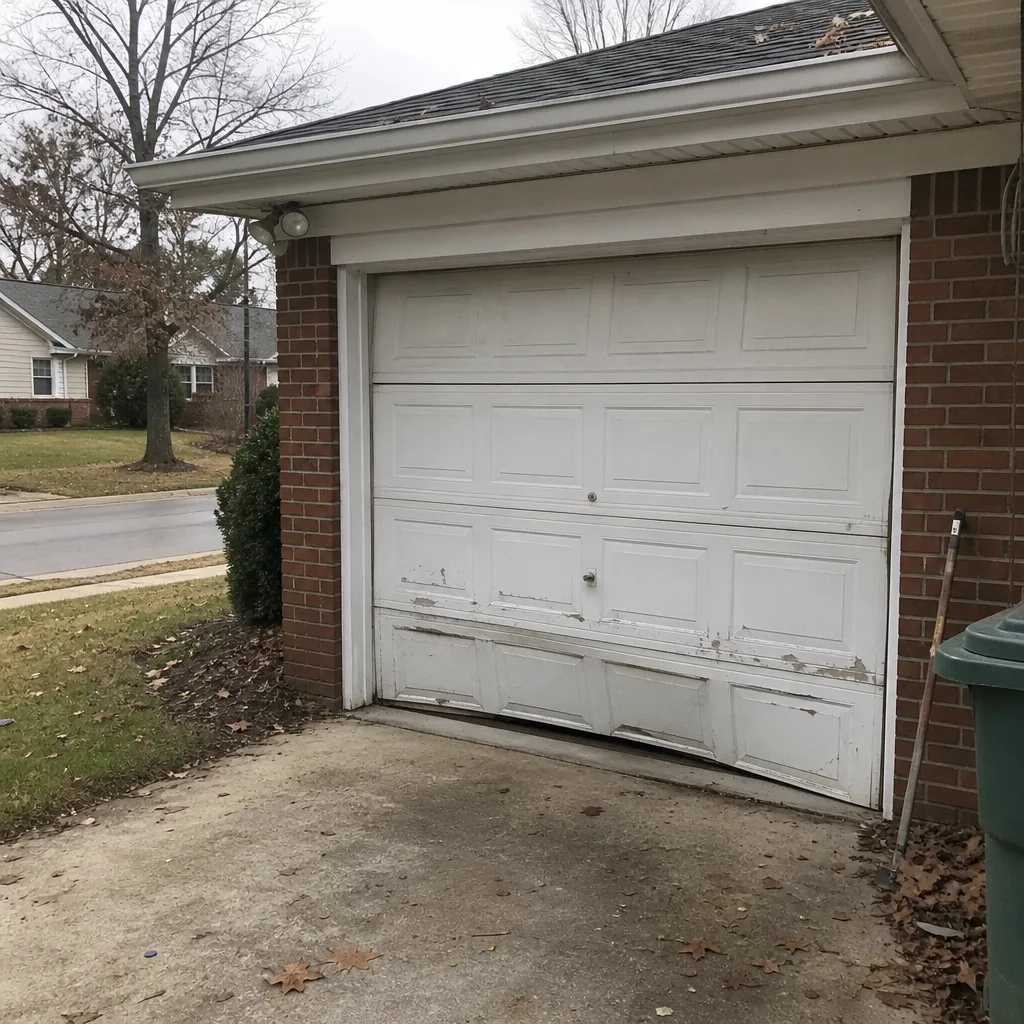 Before
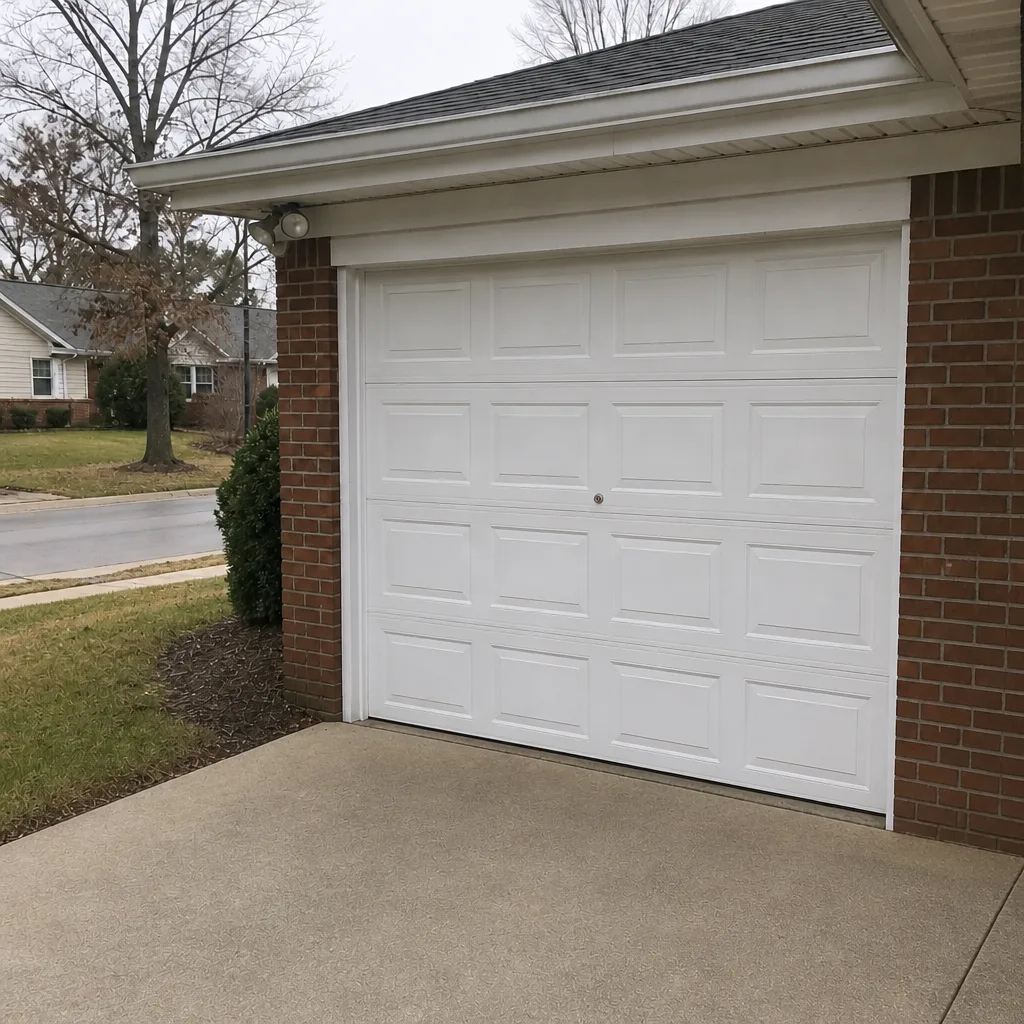 After
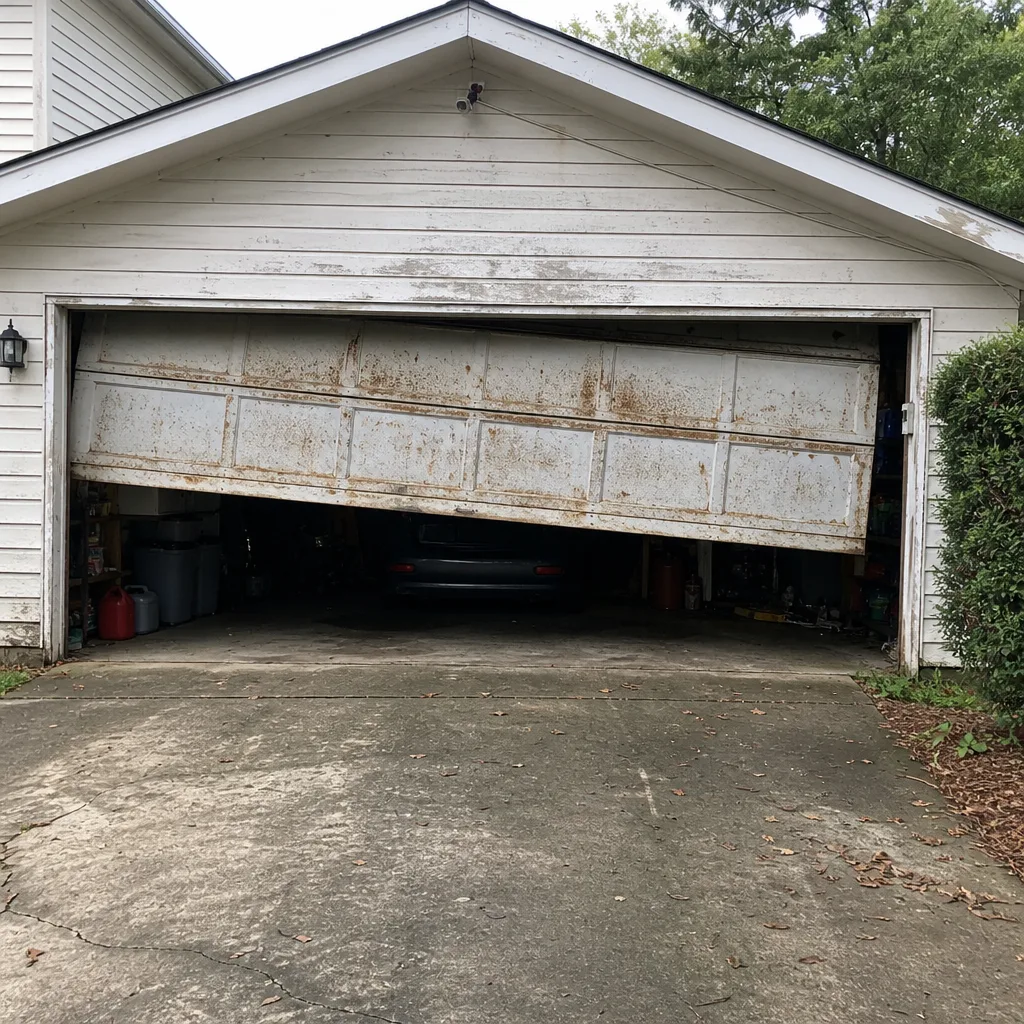 Before
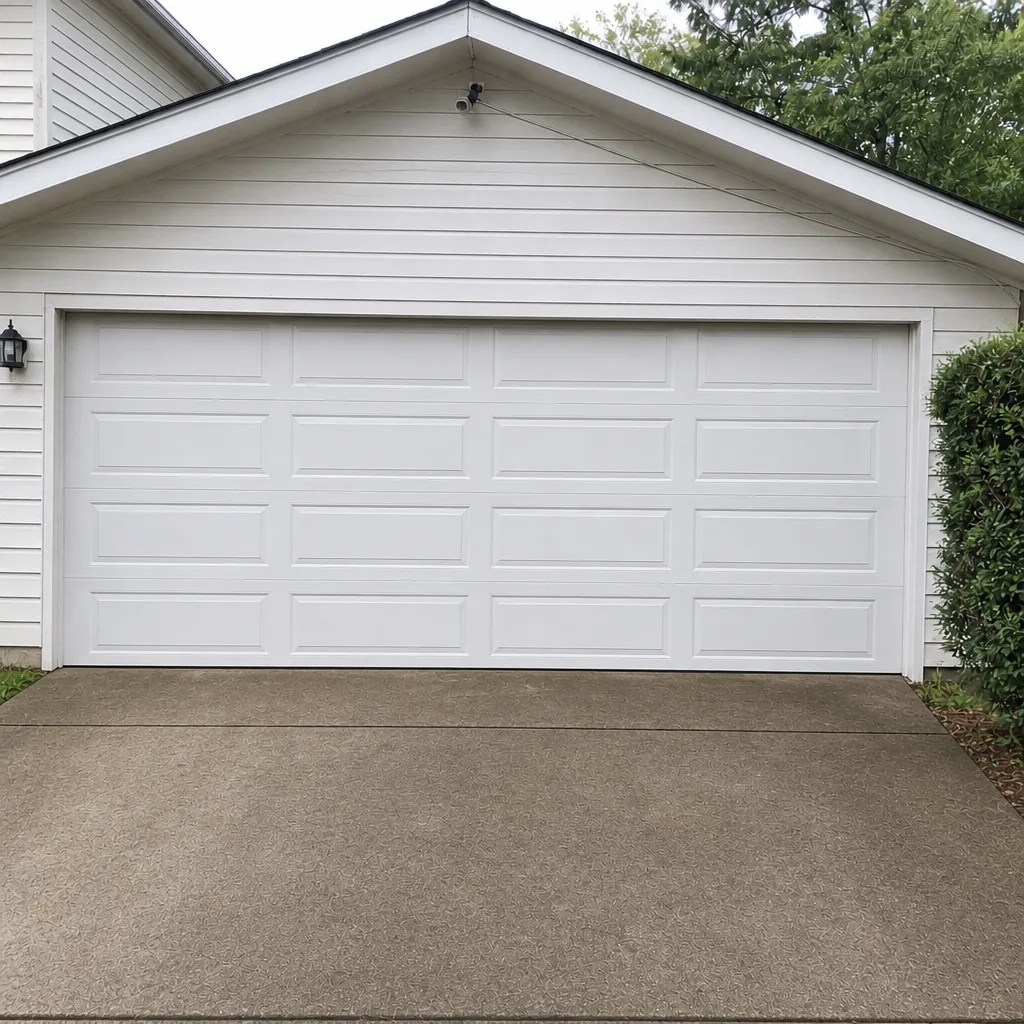 After
When to Call a Professional
Call a technician when the door fails the balance test, when you see any of the five urgent signs, or when the opener behaves differently than it did a month ago. Call earlier than you think you need to if the door is your only exit – the main garage door on a Raleigh home that serves as the family’s primary entry can usually be repaired the same day. A professional diagnosis also protects you from the mistake a lot of homeowners make: replacing a part that wasn’t the actual failure. Orchard Garage Door Repair offers free estimates in Raleigh – call (866) 942-6232. Service covers all three core areas – repair, opener work, and full installation – under one roof, so a diagnosis leads to a fix rather than a referral. Our technicians have up to experience across the brands already on your door.
Frequently Asked Questions
The five most common warning signs we see on Raleigh doors are a two-second delay before the door moves, grinding at the start of a cycle, a door that rests unevenly on one side, a remote that works only up close, and a single loud pop at the start of lift. The first three typically point to door-side problems. The last two usually point to the opener. Call (866) 942-6232 for a free estimate and we can tell you which category yours falls into.
Repair pricing in Raleigh depends on the specific fault, so there isn’t one number. Roller and hinge work is at the low end of the spectrum, spring and cable work sits in the middle, and opener board or gear replacements sit higher. We give a written estimate before any work starts, so the price you agree to is the price on your invoice. Call (866) 942-6232 for an exact quote – estimates are free.
No. A door with a broken spring should not be operated, even once, because it will pull unevenly on the intact spring and cable and can cause both to fail. Disconnect the opener by pulling the red release handle and keep the door closed until a technician arrives. Call (866) 942-6232 and we’ll talk through the situation and book the repair.
Summer noise on a Raleigh door is usually the wood or composite panels swelling in high humidity and binding in the track, or grease drying and hardening in the heat. It’s a maintenance repair, not a failure. A balance test will confirm the door is still correctly tensioned, and a track adjustment usually removes the noise. Call (866) 942-6232 if you want a technician to confirm.
No. We inspect the door, diagnose the actual fault in the system in front of us, and quote the repair before any work begins. If something else turns up that changes the scope, we tell you and get your agreement before proceeding. You’re never charged for a discovery you didn’t approve. Call (866) 942-6232 for a free estimate and an upfront price.
Yes. The technicians who work on your door are state-licensed and insured, and they’re trained across the major garage door and opener brands – LiftMaster, Chamberlain, Genie, Clopay, Amarr, Wayne Dalton, Craftsman, and Raynor – so they diagnose the specific equipment you own, not a generic guess. Call (866) 942-6232 to book a visit.
The Bottom Line
Garage door problems are rarely sudden. They announce themselves weeks ahead through sounds, delays, and small visual cues, and the homeowner who can tell a squeal from a pop is in a better position than the one who can’t. If you remember nothing else, remember this: grinding, squealing, and rattling usually mean scheduled repair, while a pop, a sag, a slack cable, or a spring gap mean stop using the door. The balance test tells you whether your springs are the problem. And a Raleigh door whose symptoms are new this season usually isn’t failing – it’s seasonal maintenance. When you need someone to look, call Orchard Garage Door Repair at (866) 942-6232. We answer 24/7, dispatch 7am to 7pm Sunday through Friday, and the estimate is free. We work on the brand you already have, and we’ll tell you which repair actually makes sense for your door.
Written by the team at Orchard Garage Door Repair.