
Last updated November 15, 2026
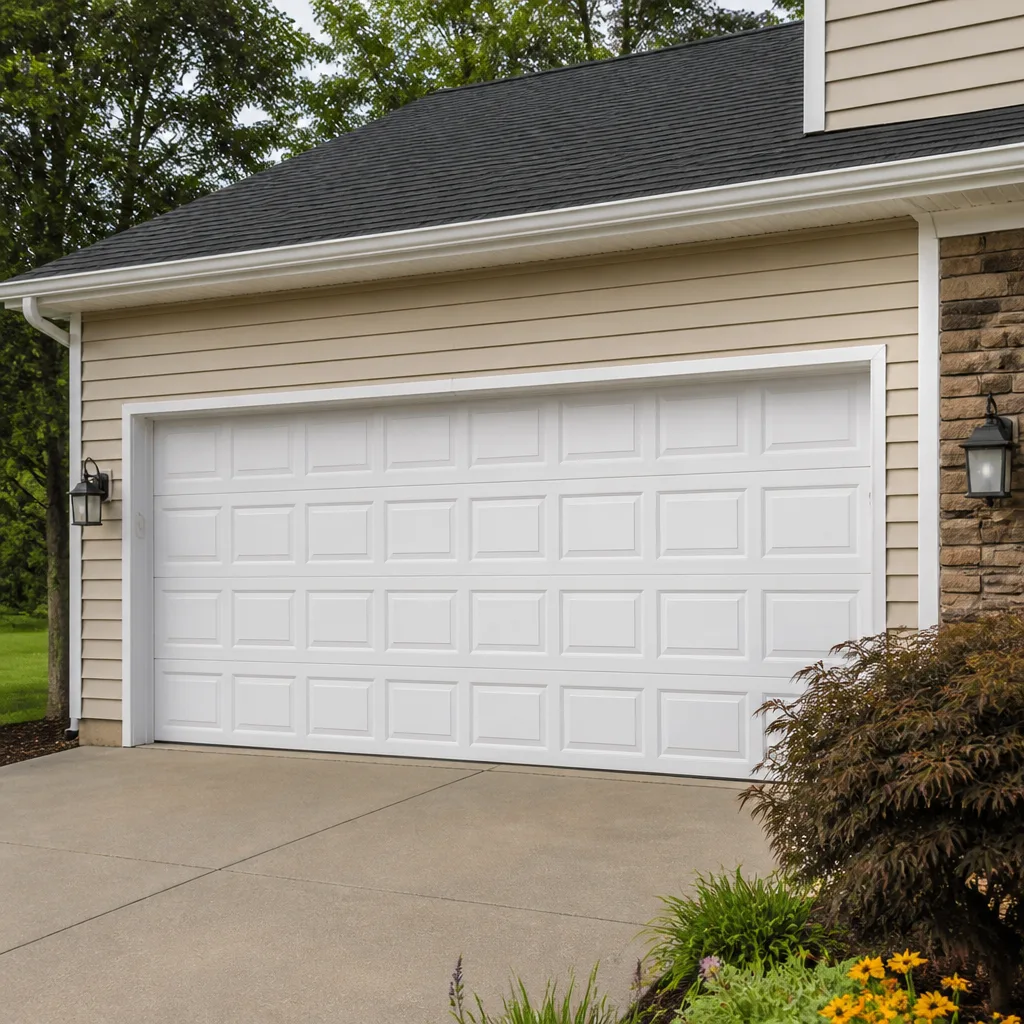 Raised-panel steel
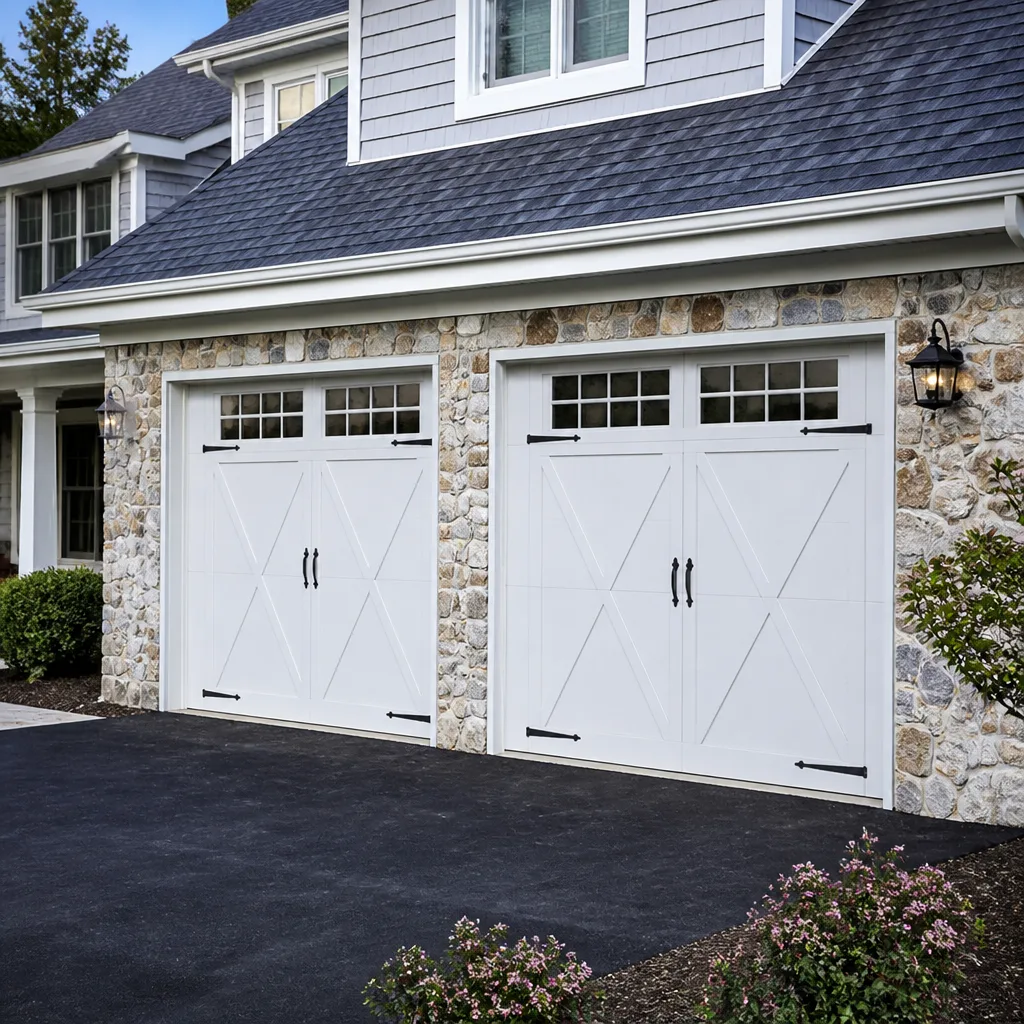 Carriage house
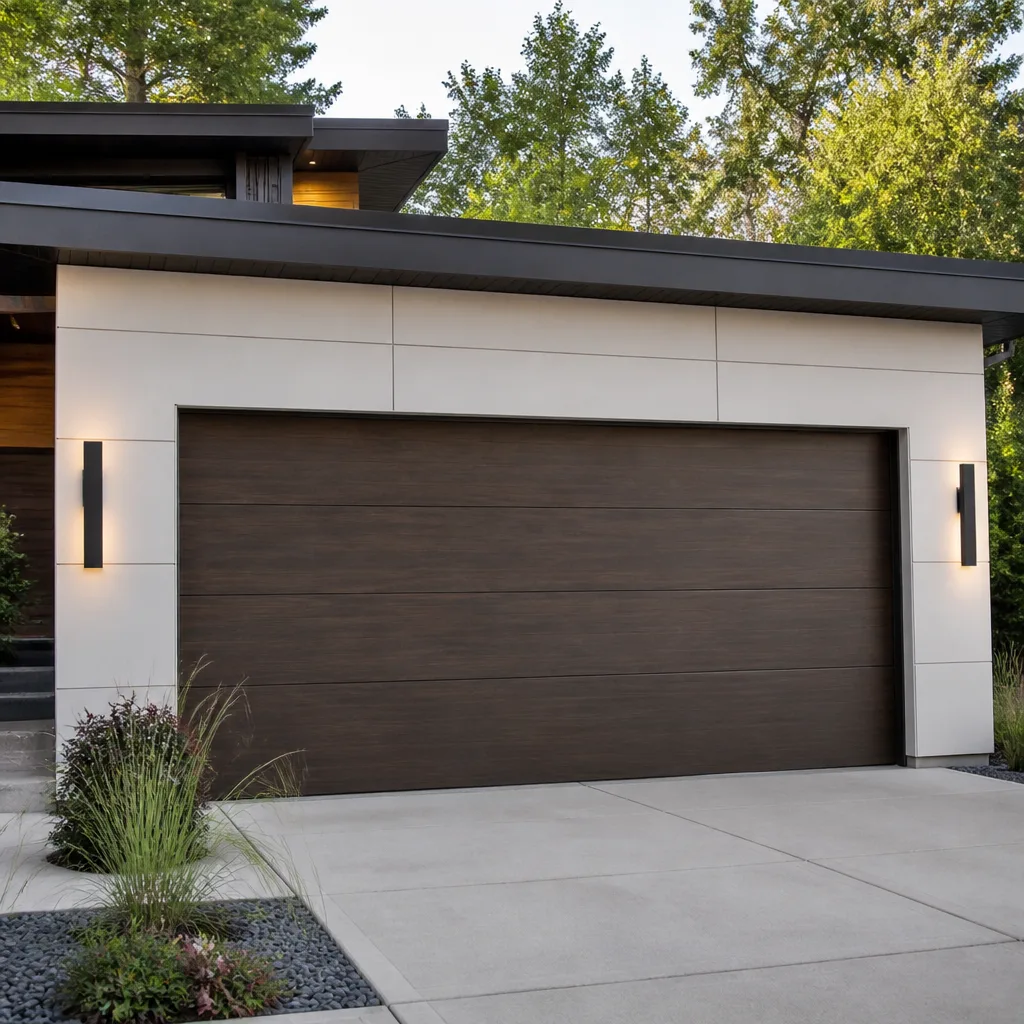 Modern flush
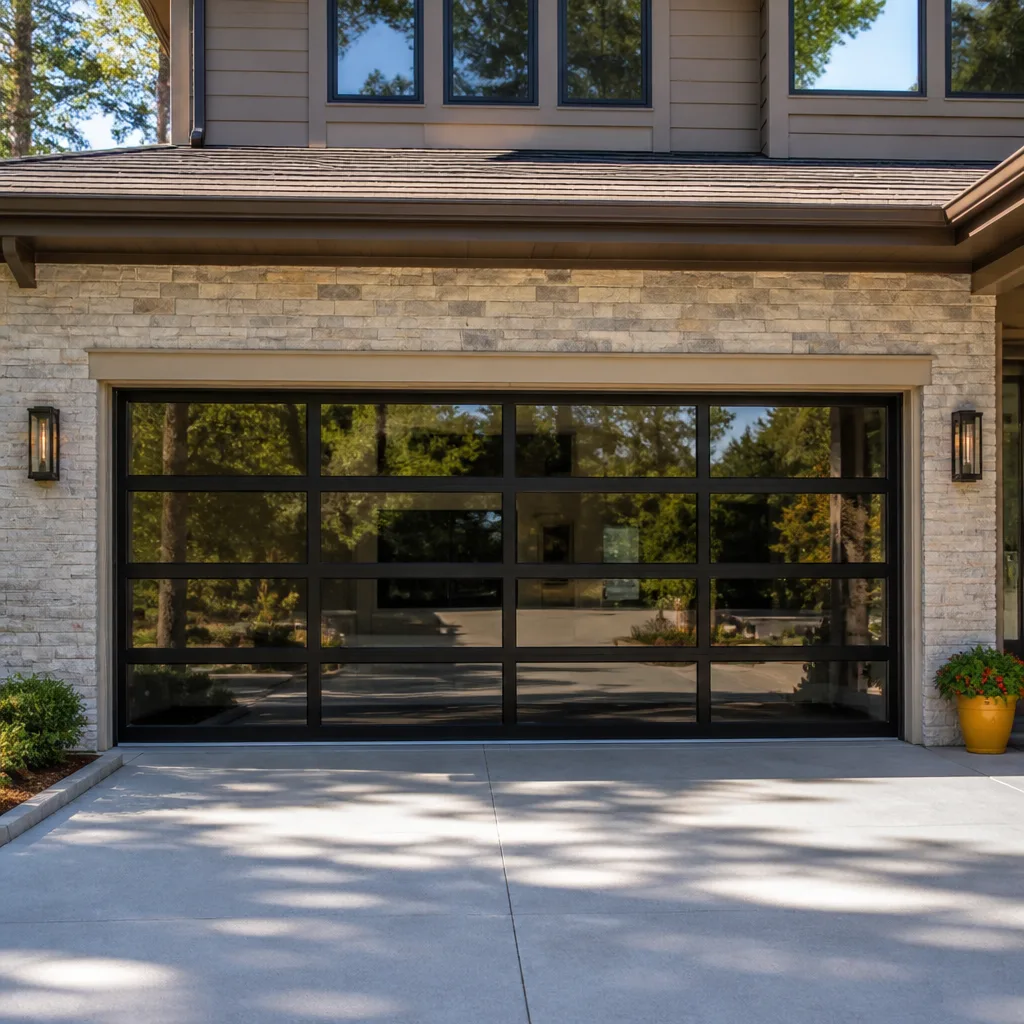 Full-view glass
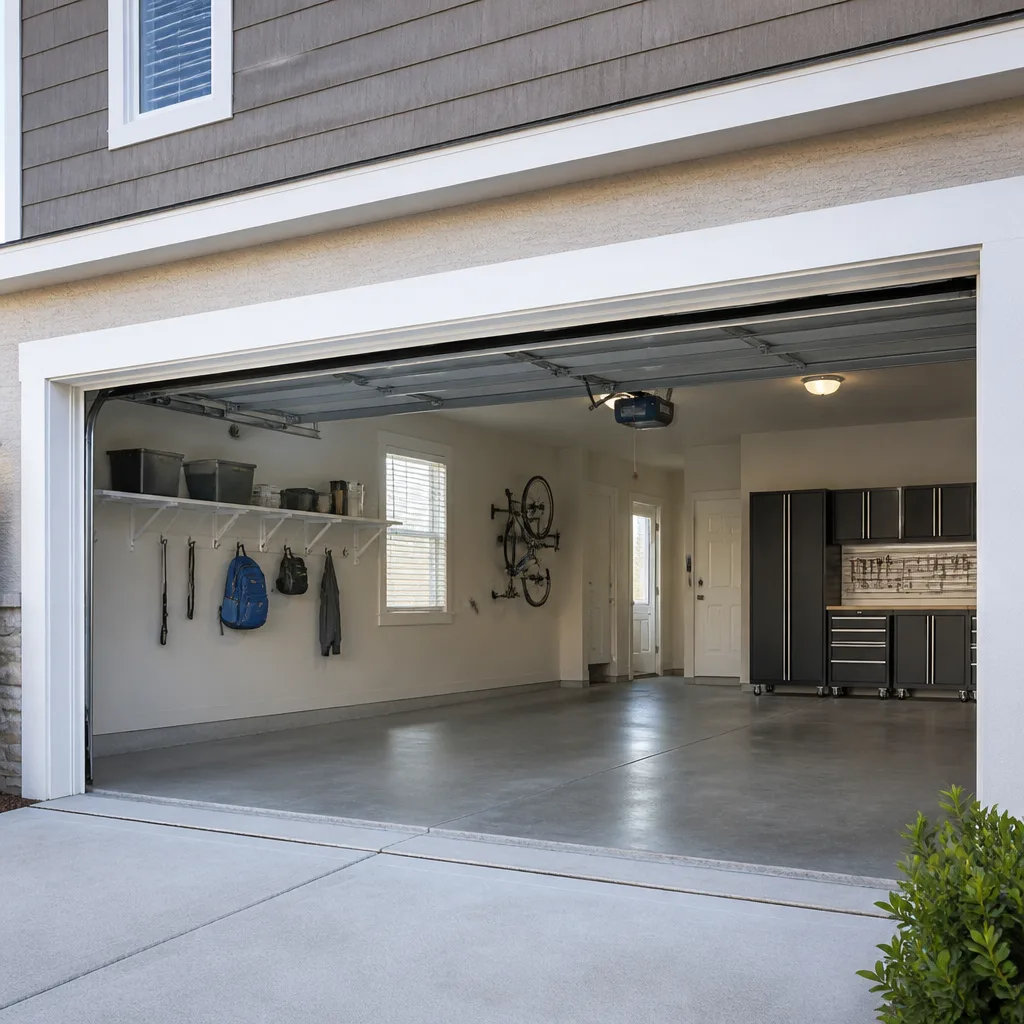 LiftMaster openers
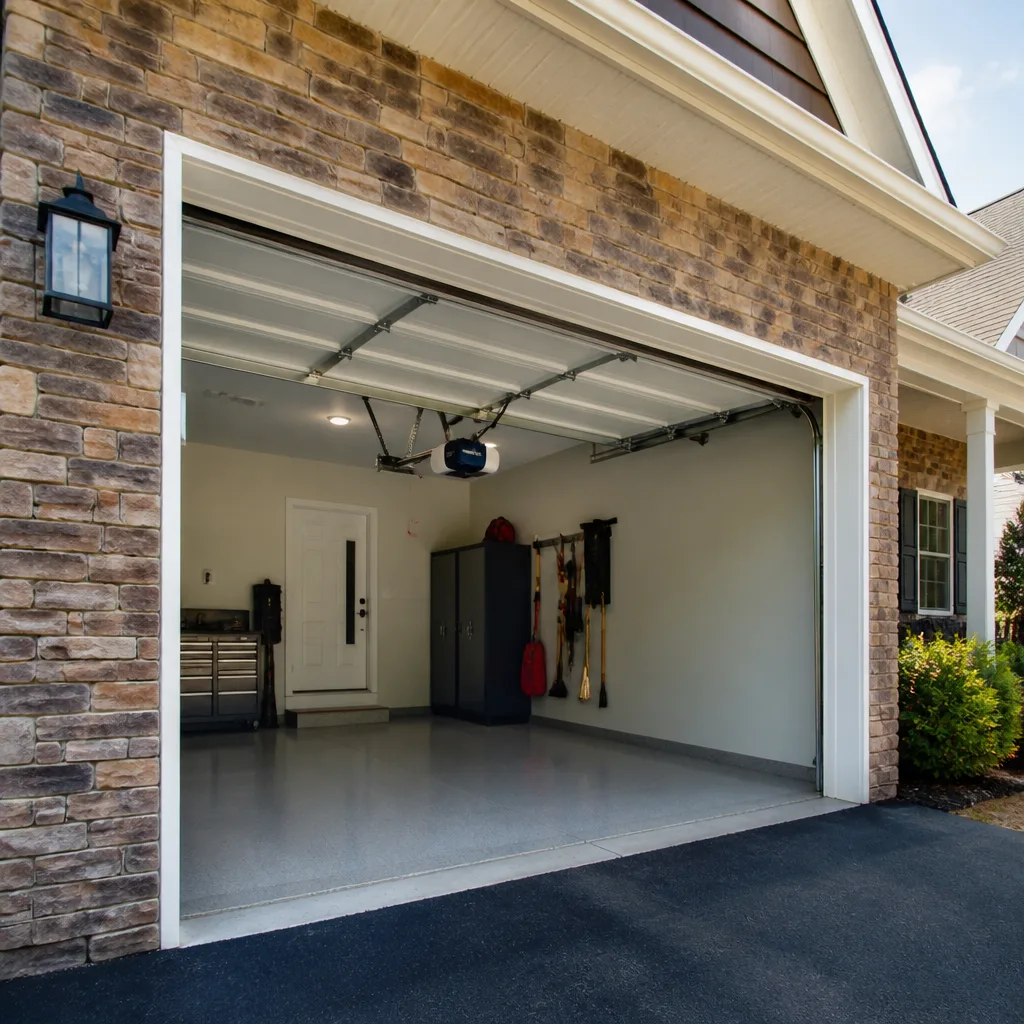 Chamberlain openers
Full 25-point door and opener safety check with every visit - springs, cables, rollers, tracks, and your LiftMaster or Chamberlain opener included
You get a price before we start. It does not change when the pro arrives.
Get your free estimateGarage Door Repair Maintenance Schedule: What to Do and When
Most garage door manuals tell you to lubricate once a year and call it done. In Raleigh, that advice runs into a wall of humidity, spring pollen, and temperature swings that push metal and wood through real seasonal stress. The bigger problem is what the generic schedule leaves out: over-lubricating nylon rollers, greasing parts that should stay dry, and skipping the two checks that actually predict a spring or opener failure months ahead of time. A maintenance schedule isn’t about doing more tasks. It’s about doing the right few tasks at the right intervals. This guide gives you a month-by-month calendar built for Raleigh conditions, tells you which products to use and which to skip, walks you through the balance and force tests at home, and shows where a technician’s annual tune-up picks up.
Quick Answer
A practical garage door maintenance schedule is four tasks a year, not twelve: a monthly visual check of springs, cables, and rollers; a quarterly balance and force test; a twice-yearly lubrication of hinges, rollers (steel only), tracks, and the torsion spring; and an annual professional tune-up for the parts homeowners can’t safely adjust. In Raleigh, shift the lubrication to late spring and early fall to work around pollen and humidity, and add a track-cleaning after the heavy pollen drop in April.
Styles & brands we work with
- Raised-panel steel
- Carriage house
- Modern flush
- Full-view glass
- LiftMaster openers
- Chamberlain openers
Table of Contents
- Why Raleigh Conditions Change the Schedule
- The Month-by-Month Calendar
- What to Lubricate, What to Never Lubricate
- Two Home Tests That Predict Failure
- What a Professional Tune-Up Covers
- Keeping a Maintenance Log
- Brand Differences Worth Knowing
- Common Mistakes to Avoid
Why Raleigh Conditions Change the Schedule
Piedmont North Carolina sits in a zone where humidity swings are wide and pollen season is intense. From March through May, the oak and pine pollen in Raleigh coats every horizontal surface, including the top of your door and the grease in your tracks. By July, the same humidity that fogs up your windows gets into your hinges and starts working on unpainted metal. And in January, a garage that sits at 28 degrees overnight and 55 degrees by afternoon puts the torsion spring through a small expansion and contraction cycle every single day.
Those aren’t hypothetical weather concerns. They’re the reason a maintenance calendar written in Michigan or Arizona underperforms here. Manufacturers write for the average of everywhere. In our experience working on garage doors across Raleigh, the parts that fail earliest and most often are the ones most directly exposed to moisture and temperature cycling: hinges, steel rollers, and the torsion spring itself.
The good news is that none of this requires you to become a hobbyist. Five minutes a month and half an hour twice a year covers most of it. The calendar below is tuned to Raleigh’s seasons specifically, which means the intervals are placed where they do the most good, not where a generic manual says to put them.
- Spring (March-May): pollen drop, humidity climb, first big temperature swings
- Summer (June-August): peak heat, thermal expansion of steel panels, opener strain from running more often in the heat
- Fall (September-November): leaf debris in tracks, the last good window for lubrication before winter
- Winter (December-February): overnight cold and daytime warming, spring tension sensitivity
The Month-by-Month Calendar
Here’s the schedule we recommend to Raleigh homeowners. It’s twelve months of small tasks arranged so that no single month carries more than fifteen or twenty minutes of work, and major tasks land in the seasons that make sense for them. Print it, tape it inside the garage door frame, and check it off as you go.
- January: Cold-weather balance test. Lift the door halfway by hand and let go. It should hold. If it drops or rises, the spring tension has drifted and it’s time for a professional adjustment.
- February: Inspect the bottom seal for cracks and the weatherstripping around the frame. Cold months make old rubber brittle, and in Raleigh a cracked bottom seal lets in both cold air and the first spring insects.
- March: Wipe down the tracks with a dry rag before pollen season peaks. Inspect hinges for loose screws and tighten any that have backed out.
- April: Deep-clean the tracks. Pollen plus the light factory grease in new tracks forms a paste that slows the door and strains the opener. Clear it before it hardens.
- May: Spring lubrication pass. Apply a garage-door-specific lithium or silicone spray to hinges, steel rollers, the torsion spring, and the bearing plates. This is the annual lubrication that matters most in Raleigh.
- June: Force-resistance test. Stand outside the closing door with your hand ready. The door should reverse on contact. If it doesn’t, adjust the opener’s force setting or call for service.
- July: Listen to the opener. Grinding, squealing, or a rattling chain is easier to catch in summer when the door runs more often and the garage is emptier of clutter.
- August: Inspect cables and springs visually. Look for fraying at the drums and for a torsion spring that looks stretched or has visible gaps between coils.
- September: Check the photo-eye safety sensors. Wipe the lenses and confirm the indicator light is steady, not blinking. Low fall sun angles sometimes catch a misaligned sensor.
- October: Clean leaves and debris from the tracks and the floor threshold. Fall debris is the single most common cause of a door that “runs rough” in Raleigh.
- November: Fall lubrication pass. Same products as May, same components. This is your winter prep and it takes about ten minutes.
- December: Full visual inspection before the coldest weeks. Hinges, rollers, cables, spring, and the opener’s rail and chain. Note anything that looks off in your log for the annual tune-up.
What to Lubricate, What to Never Lubricate
Lubrication is where most DIY maintenance goes wrong, and it’s the reason a “lubricate once a year” instruction from a manual can actually make a door worse. The rule of thumb is simple: metal-to-metal contact needs lubrication, and anything made of nylon, plastic, or rubber does not. Greasing a nylon roller attracts grit that grinds the bearing surface and shortens its life. Greasing a bottom seal turns it into a dirt magnet and breaks down the rubber.
Lubricate these
- Hinges: a light spray at each pivot point, once in spring and once in fall
- Steel rollers: a small amount on the bearing, not on the wheel face
- Torsion spring: a light coating on the coils extends its life against humidity
- Bearing plates and center bracket: a few drops where the shaft passes through
- Track curves: the curved sections at the top of the track where rollers change direction get more wear than the straight runs
- Opener rail and chain (if chain-driven): a garage-door-specific lubricant on the chain, never motor oil
Never lubricate these
- Nylon rollers: they’re self-lubricating; grease attracts grit that kills them
- Bottom seal and weatherstripping: rubber needs to stay dry; oil breaks it down
- Track interior face: the track is a guide, not a bearing surface; greasing it collects dirt and slows the door
- Photo-eye lenses: a dry, soft cloth only, no product
- Plastic gears inside the opener: sealed at the factory; adding lubricant does nothing
Use a garage-door-specific spray, either lithium-based or silicone. Avoid WD-40 as a lubricant (it’s a solvent, not a long-term lube), avoid motor oil, and avoid heavy grease. In Raleigh’s humidity, a light product that doesn’t hold water is better than a heavy one that clings to grit. If you’re not sure which product fits your door, that’s a fair question to ask when you call for garage door repair.
Two Home Tests That Predict Failure
Two simple tests tell you more about your door’s health than any visual inspection, and both are safe to do at home. Do them quarterly, and pay attention to the trend: a door that passes in April and struggles in October is telling you something.
The balance test
Disconnect the opener first by pulling the red emergency release handle. With the door closed, lift it by hand to about waist height, then let go. A well-balanced door stays put. A door that drops on its own has lost spring tension. A door that rises on its own has too much. Both are signs the springs are out of adjustment and need a professional. Do not attempt to adjust torsion springs yourself: they’re under very high tension and can cause serious injury.
The force-resistance test
Reconnect the opener. Stand outside the garage door and place a piece of wood or a rolled-up towel on the ground in the door’s path. Close the door using the remote. When the door meets the obstruction, it should reverse within two inches. If it barely touches and keeps closing, or reverses too easily (a door that reverses at the lightest brush is also set wrong), the opener’s force setting needs adjustment. Most modern openers like a Genie or a LiftMaster sold in Raleigh have a force dial or a digital setting on the motor head. If you can’t find it, call for garage door opener repair before the door’s safety margin narrows further.
What makes these tests predictive is the trend, not the single result. If your balance test passes easily in the spring and requires effort in the fall, the spring has lost tension from the summer’s heat cycle. Catching that early is far easier than catching it after the spring snaps.
What a Professional Tune-Up Covers
The purpose of an annual professional tune-up isn’t to duplicate what you did at home. It’s to cover the parts of the system that aren’t safe for homeowners to touch, and to catch wear the untrained eye doesn’t see. In our experience, this is where the two routines complement each other: you handle the surface, we handle the tension and the electronics.
Here’s what a technician typically does during a tune-up on a typical Raleigh door:
- Adjusts or resets torsion spring tension to match the door’s weight
- Inspects cables for fraying at the drums (a cable under load is not a homeowner item)
- Tightens all hardware, including hinges, brackets, and the opener’s mounting points
- Checks roller condition and replaces worn or flat-spotted rollers
- Tests the opener’s force and travel settings against the manufacturer’s spec
- Checks the photo-eye and safety-reverse function under real-world conditions
- Verifies the door’s alignment in the opening, which drifts over time as hinges wear
- Inspects the balance and confirms the door’s weight hasn’t changed (which it can, on a wood door)
Every one of those tasks involves a component under high tension or a control system with a safety function. That’s the line. Our technicians have up to experience, and they know the difference between a garage door that needs a $40 part and one that needs a real repair. If you’re in Raleigh and want a professional check done once a year, that’s the tune-up to schedule.
Keeping a Maintenance Log
You’d be surprised how much a maintenance log changes a service call. Without one, a technician starts from zero: they don’t know how long the rollers have been in, whether the spring has ever been replaced, or how recently the opener was adjusted. With one, the assessment is faster and more accurate, and the technician can tell you what’s due rather than what’s unknown.
Keep a simple notebook on a shelf in the garage or a note on your phone. Five columns cover everything you need:
- Date of the task or service
- What was done (e.g. “lubricated hinges and spring,” “replaced bottom seal”)
- Who did it (homeowner, or technician and company name)
- Parts replaced, with the brand if known (e.g. “Clopay rollers,” “Wayne Dalton hinge”)
- Notes (e.g. “south-facing side of door sticks in summer,” “balance test passed easily”)
The brand column matters more than you might think. If your door is a Clopay, an Amarr, or a Wayne Dalton, the parts and tolerances differ, and knowing the model saves the technician from guessing on a return visit. The notes column is where real value lives: over two or three years, patterns show up (“door sticks after rain,” “opener sounds rough in July”) that let a technician diagnose a problem before it becomes a repair.
For a homeowner, the log is also a reminder. Every time you check it, you see when the last lubrication was and whether a tune-up is due. In Raleigh, where seasons shift fast, that’s worth more than a whole binder of generic manuals.
Brand Differences Worth Knowing
Most of the maintenance calendar above applies to any door, regardless of brand. But some brand-specific details are worth knowing, because they change how often certain parts need attention or what to look for.
Clopay and Amarr doors usually ship with nylon rollers on the standard build, which means the “never lubricate” rule above applies until they’re replaced with steel. Wayne Dalton’s doors often use proprietary springs and hinges, so a tune-up needs genuine or equivalent parts. On the opener side, Genie and Chamberlain models tend to have force settings you can adjust from the motor head or a digital menu, while LiftMaster units sometimes use a fixed force setting and rely on the travel limits instead. None of those differences change the schedule itself. They just tell you which maintenance tasks can be done by a homeowner and which are better left to a technician with the right parts.
If you’re not sure which brand you have, look at the sticker on the inside of the door or the opener’s motor head. Most are easy to find. If you can’t, we work on the brand you already have, whether it’s a Clopay steel door, an older Wayne Dalton, or a LiftMaster opener. Diagnosing the actual system in front of us is more useful than a generic guess.
Common Mistakes to Avoid
- Lubricating nylon rollers. It feels productive, but it’s the fastest way to shorten a roller’s life. The grease grabs grit and grinds the bearing surface.
- Greasing the track interior. The track is a guide, not a moving part. Grease in the track collects pollen and dirt and slows the door down.
- Skipping the balance test in cold weather. Winter is when torsion springs are most likely to fail, and a quick balance test in January catches the problem before the spring goes.
- Adjusting the opener’s force setting to compensate for a stiff door. If the door is running stiff, the opener is telling you something’s wrong. Turning up the force hides the problem and wears out the opener’s gears.
- Ignoring pollen season. In Raleigh, April pollen is the single biggest contributor to a “suddenly rough” door. A five-minute track clean goes further than anything else in April.
- Using WD-40 as a lubricant. It’s useful for freeing stuck hardware, but it’s not a long-term lubricant and evaporates quickly. Use a garage-door-specific product.
- Never recording what was replaced. Ten months later, the same worn hinge looks new again. A log stops the guesswork.
See the difference
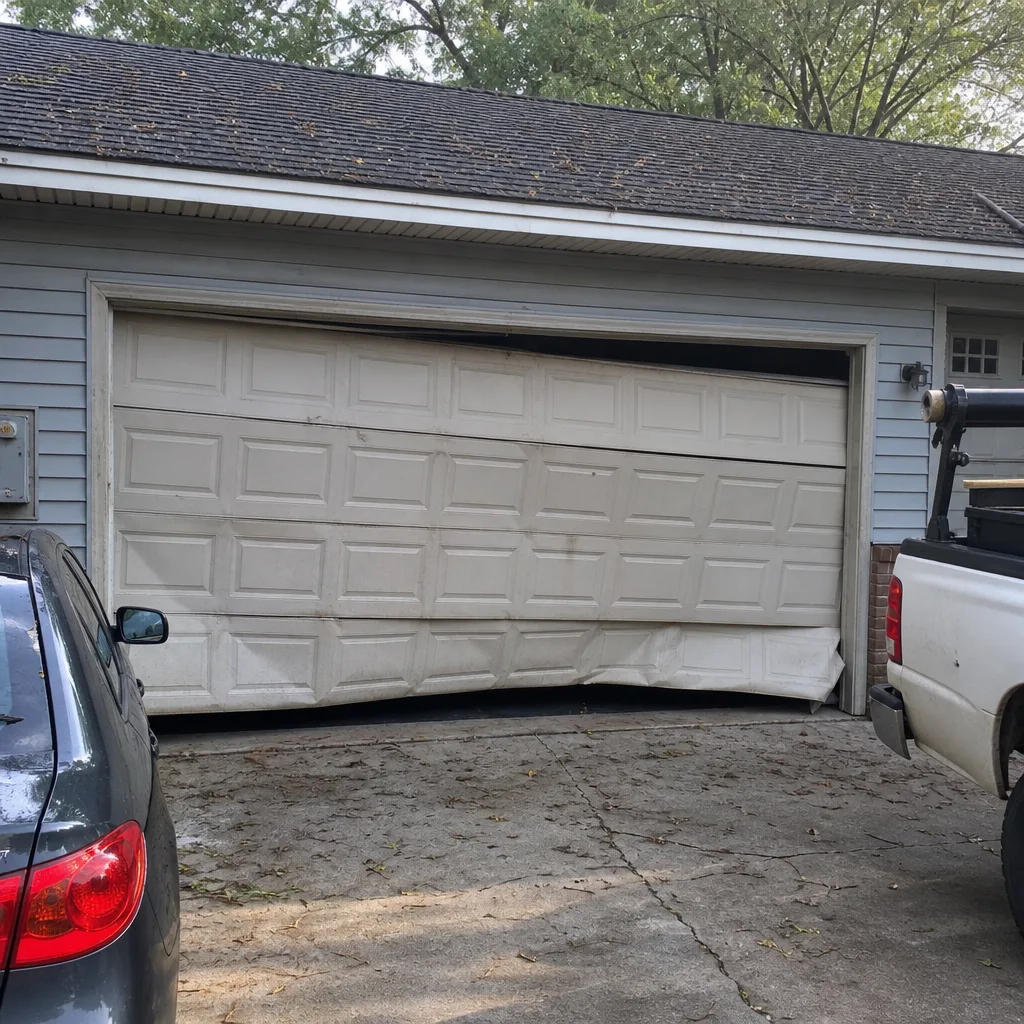 Before
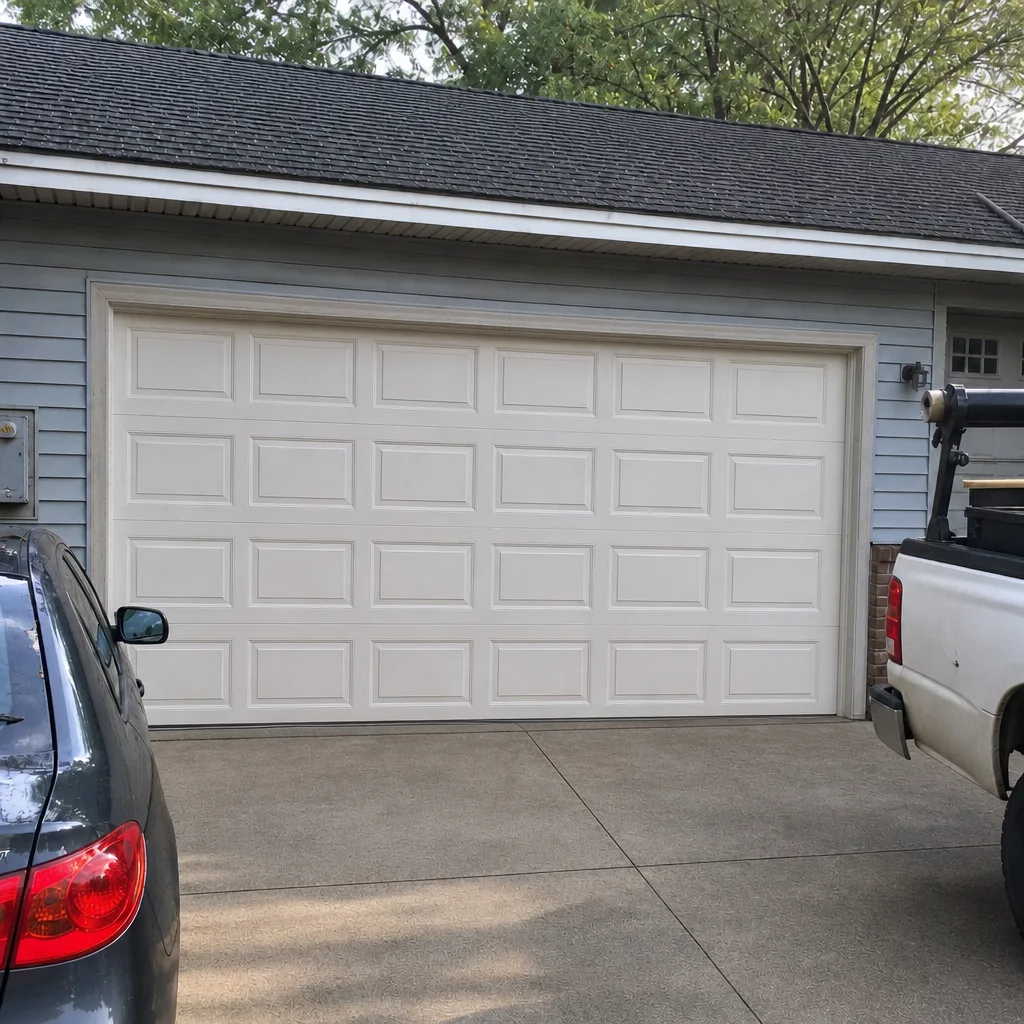 After
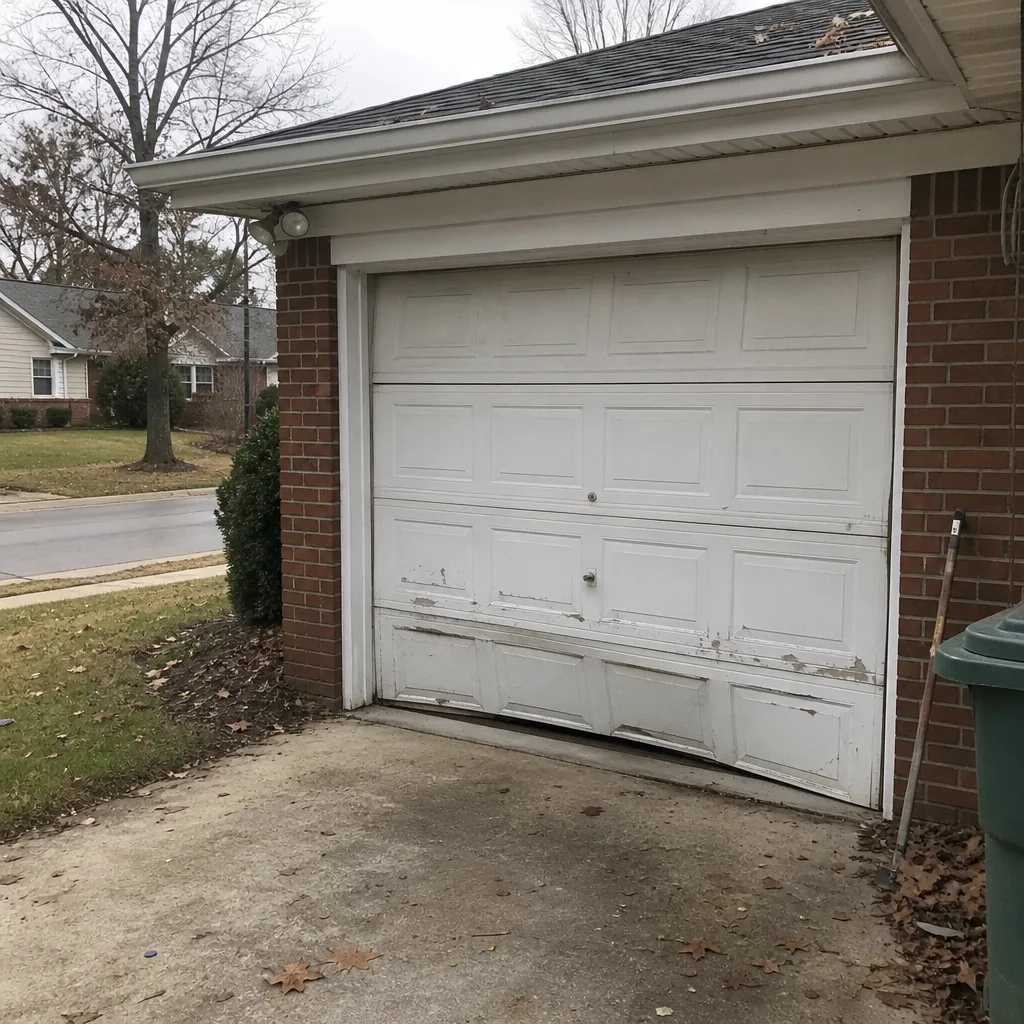 Before
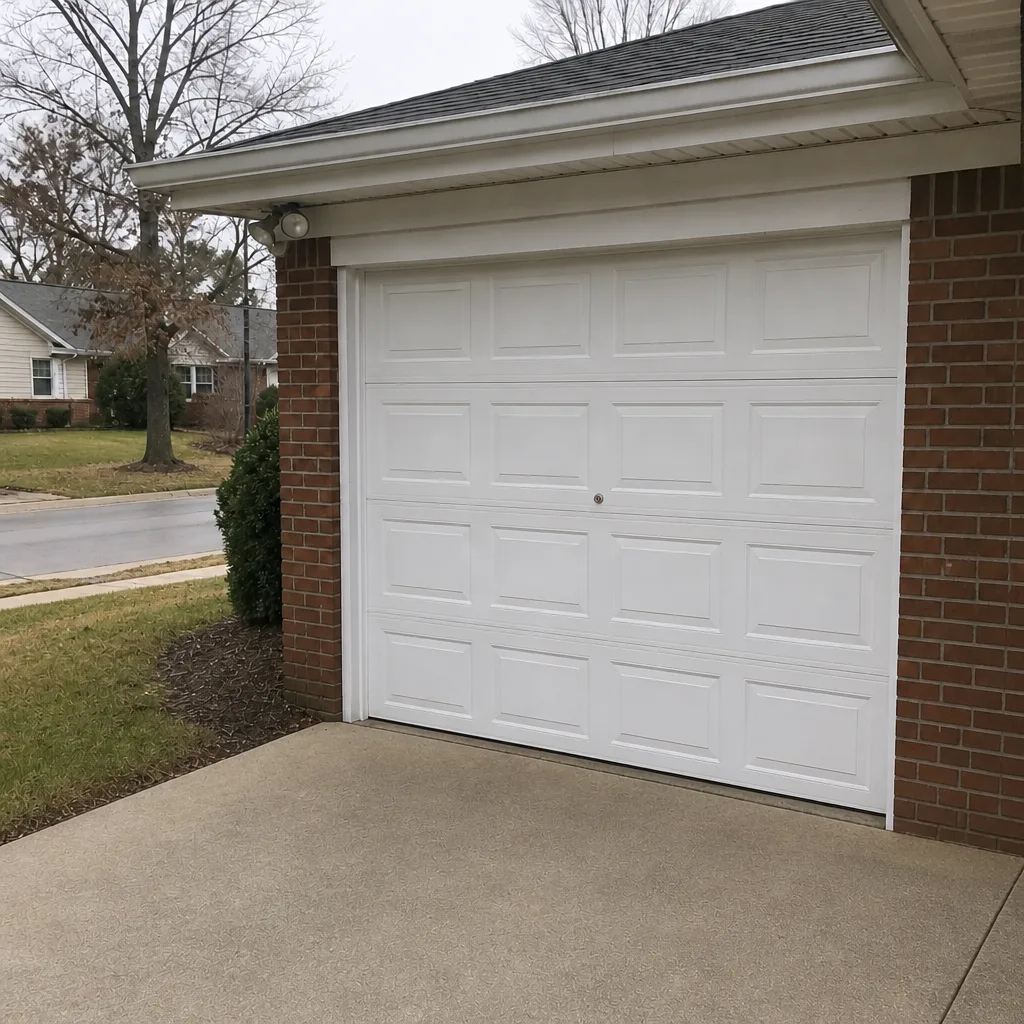 After
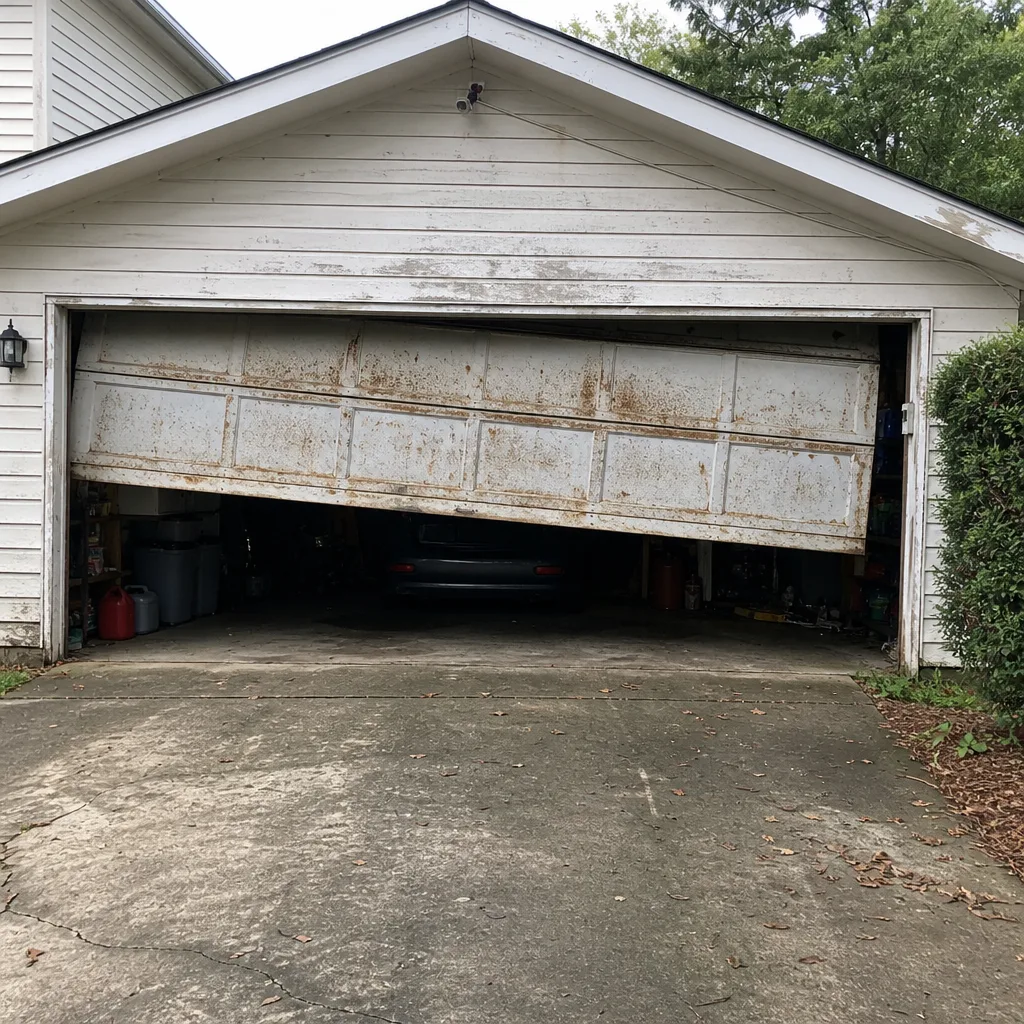 Before
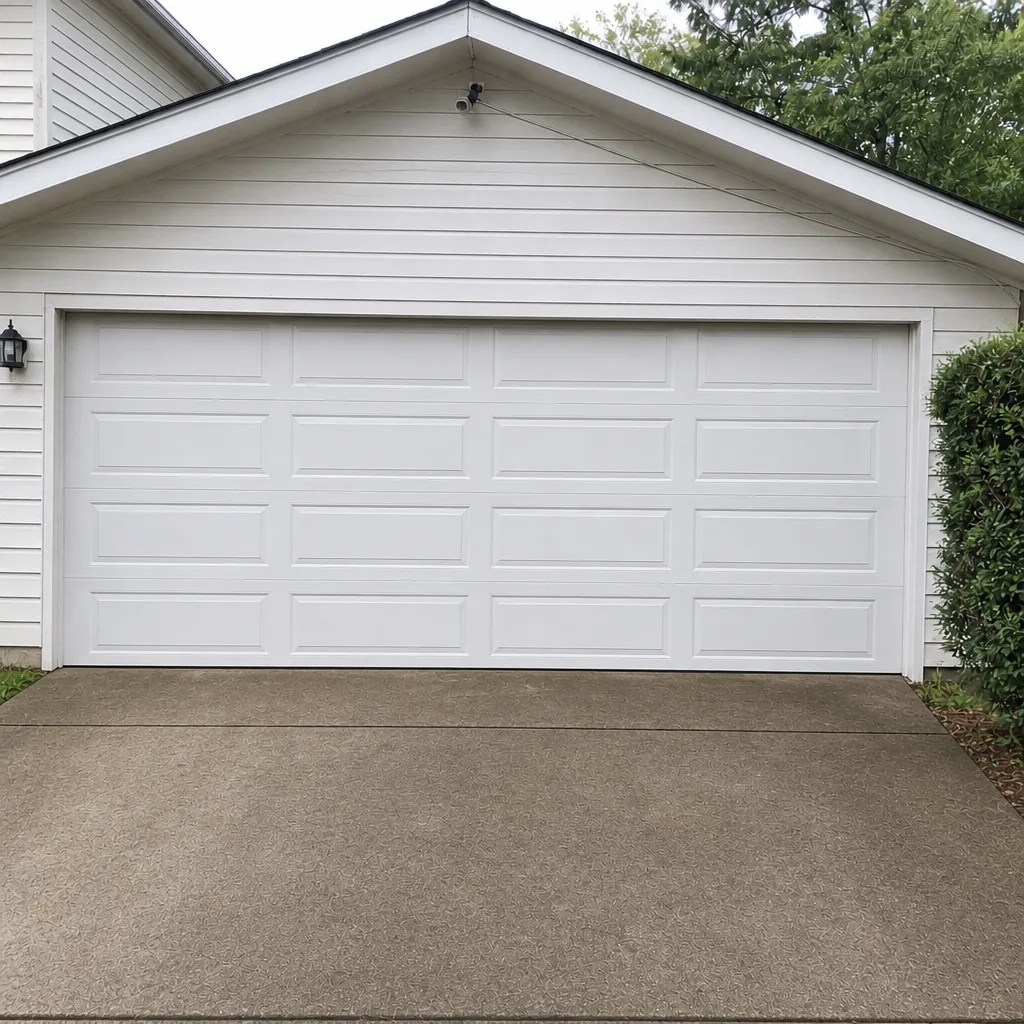 After
When to Call a Professional
Some maintenance tasks are genuinely safe for homeowners. Others aren’t, and the boundaries are clear. Call a professional if your balance test shows the door dropping or rising on its own, if you see a frayed cable at the drums, if the torsion spring looks stretched or has visible gaps, if the door reverses too slowly or not at all during a force test, or if the opener makes grinding or squealing sounds that don’t clear up after a lubrication pass. Same if the door is off its tracks, stuck partway open, or has any sign of structural damage to a panel. In Raleigh, our team offers free estimates and can assess a door on site. Some of this work is diagnostic and might be resolved in a single visit; larger jobs (a new opener, a spring replacement, a full door) get measured and scheduled. Call (866) 942-6232. We answer 24/7. Fast dispatch from 7am to 7pm, Sunday through Friday.
Frequently Asked Questions
Twice a year, in May and November, with a garage-door-specific lithium or silicone spray. The spring and fall timing aligns with Raleigh’s pollen drop and the arrival of cold weather, which are the two conditions that put the most strain on the door’s moving parts. Lubricating more often isn’t better: over-lubricating attracts grit and does more harm than good.
Yes, because the annual tune-up covers parts that a homeowner shouldn’t touch. Cables and torsion springs are under very high tension and can cause serious injury if they slip. A trained technician also adjusts the opener’s force and travel settings and checks alignment and wear that aren’t obvious from a visual inspection. Your monthly tasks and the annual tune-up complement each other; they don’t overlap.
The balance test. It’s the quickest way to tell whether the torsion spring is losing tension before it fails. Disconnect the opener, lift the door halfway, and let go. If it stays put, the spring is fine. If it drops or rises, call for service. In Raleigh, this test becomes especially important in January and July, when the temperature swing between day and night is at its widest.
No. Torsion springs hold the full weight of the door and are under extremely high tension. Adjusting or replacing them without the right tools and training is dangerous. Even professional technicians use two winding bars and follow a strict procedure. If your balance test is failing, call for professional service rather than attempting an adjustment yourself.
Date, what was done, who did it, parts replaced (with brand if known), and any notes about the door’s behavior. The brand column matters most if your door is a Clopay, Amarr, Wayne Dalton, or similar: parts and tolerances differ, and knowing the brand saves time on a return visit. The notes column is where patterns show up over two or three years, helping a technician diagnose a problem faster.
Look at the roller wheel. Nylon rollers are usually white or cream-colored and smooth; steel rollers are metallic and may show a slight sheen from the bearing surface. If your rollers are nylon, skip the lubrication step. If they’re steel, apply a light coat at the bearing. When in doubt, ask a technician to check during the annual tune-up; identifying the rollers on site takes a few seconds.
The Bottom Line
Garage door maintenance isn’t about doing more. It’s about doing the right few tasks on a calendar that fits your climate, your brand, and your habits. In Raleigh, that means a monthly visual check, a quarterly balance and force test, a twice-yearly lubrication pass timed to pollen and pre-winter, and an annual professional tune-up. Skip the parts that don’t need attention (nylon rollers, bottom seals, track interiors), and keep a log so the next technician starts with your history, not from zero. That’s the schedule. If you’d rather have a professional handle the annual check while you keep the home routine light, call (866) 942-6232 for a free estimate. We work on the brand you already have, whether that’s a Clopay door, an Amarr panel, or an older Genie opener.
Written by the team at Orchard Garage Door Repair.