
Last updated November 15, 2026
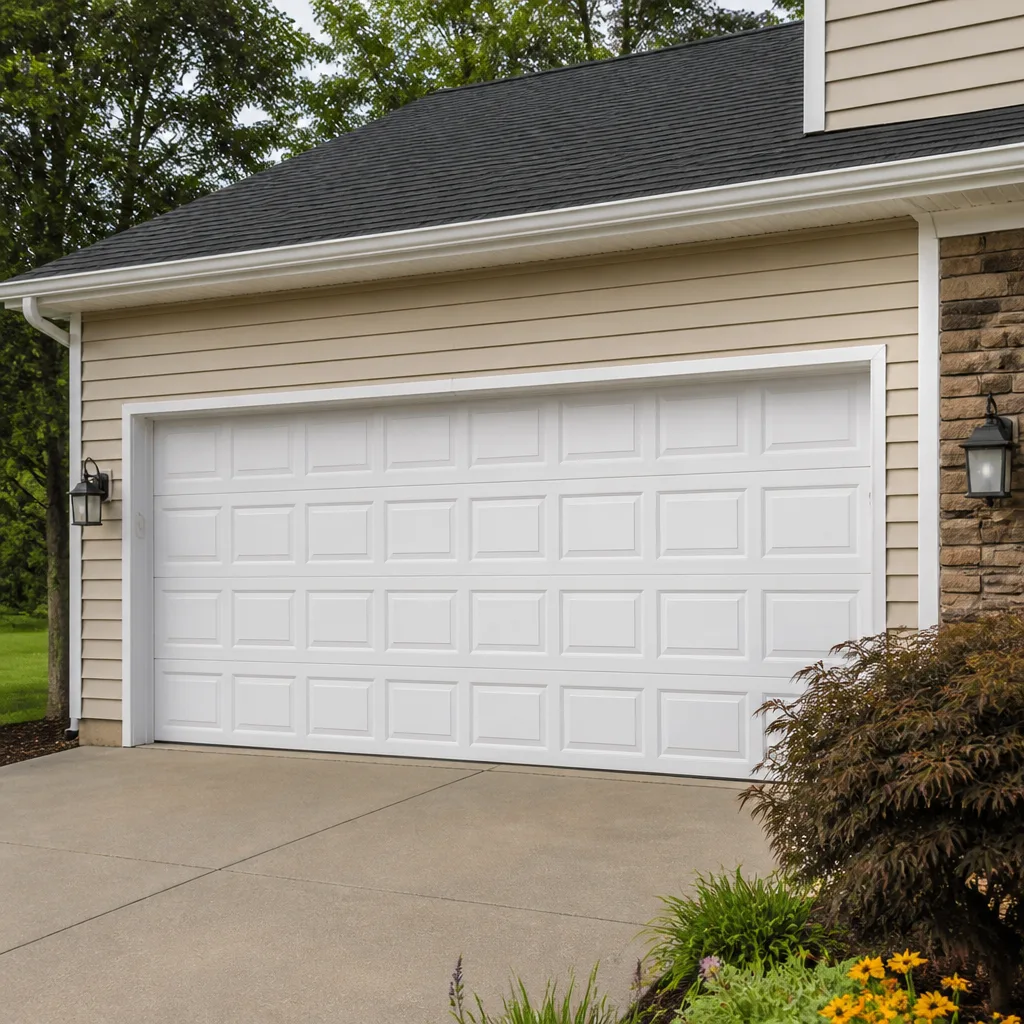 Raised-panel steel
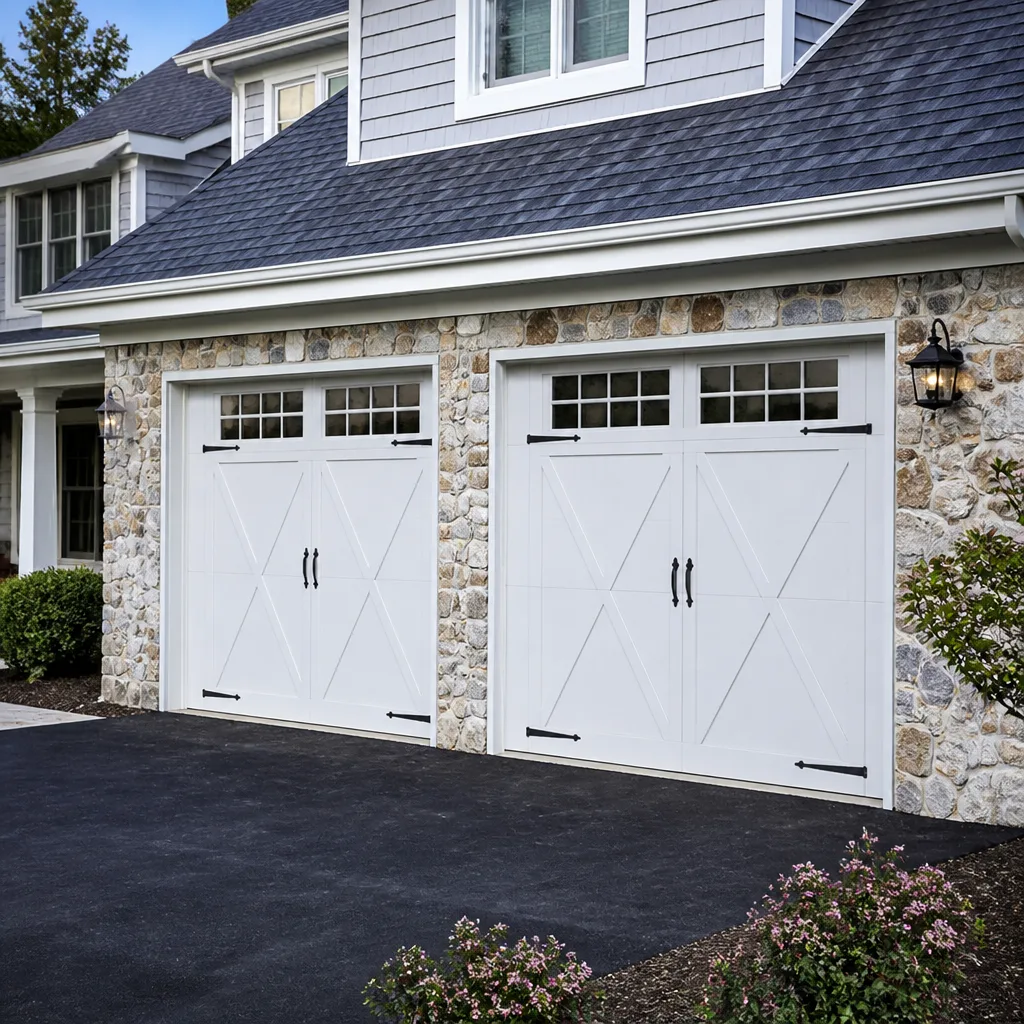 Carriage house
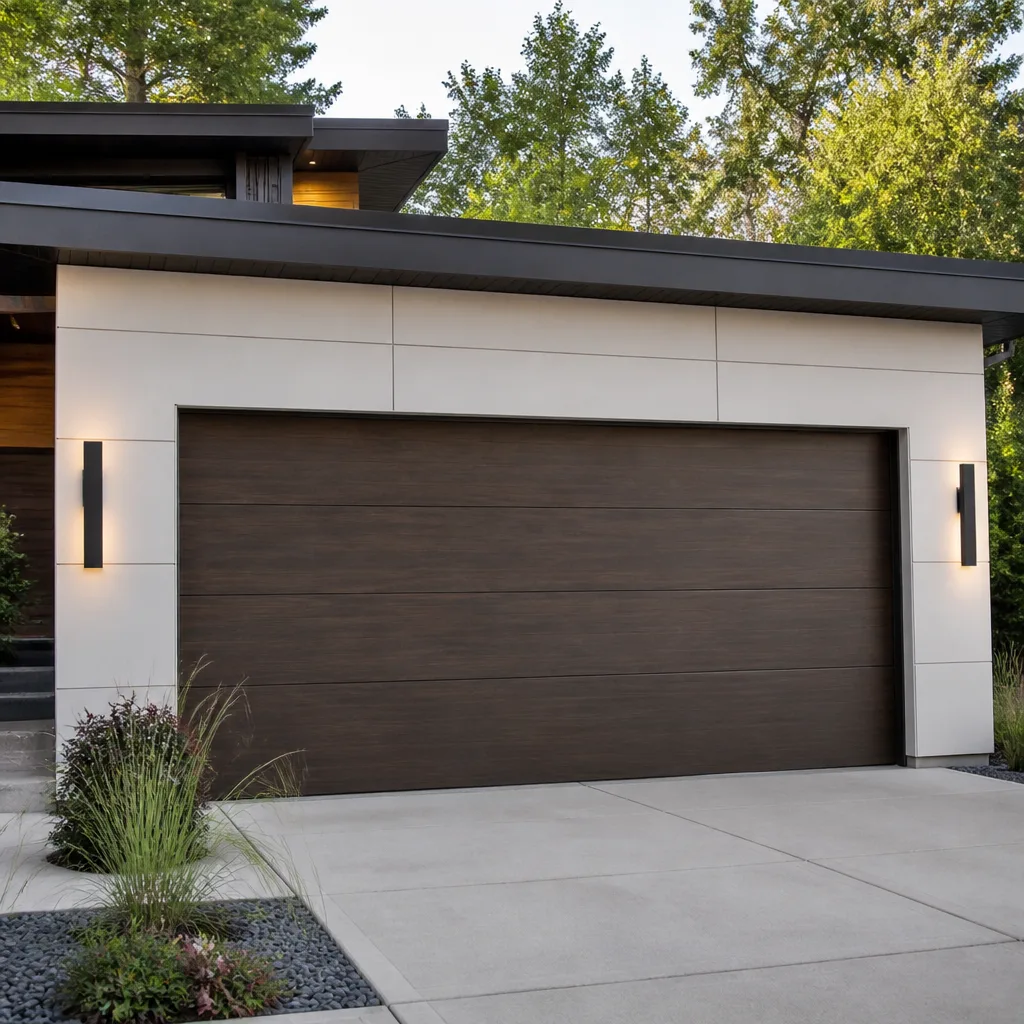 Modern flush
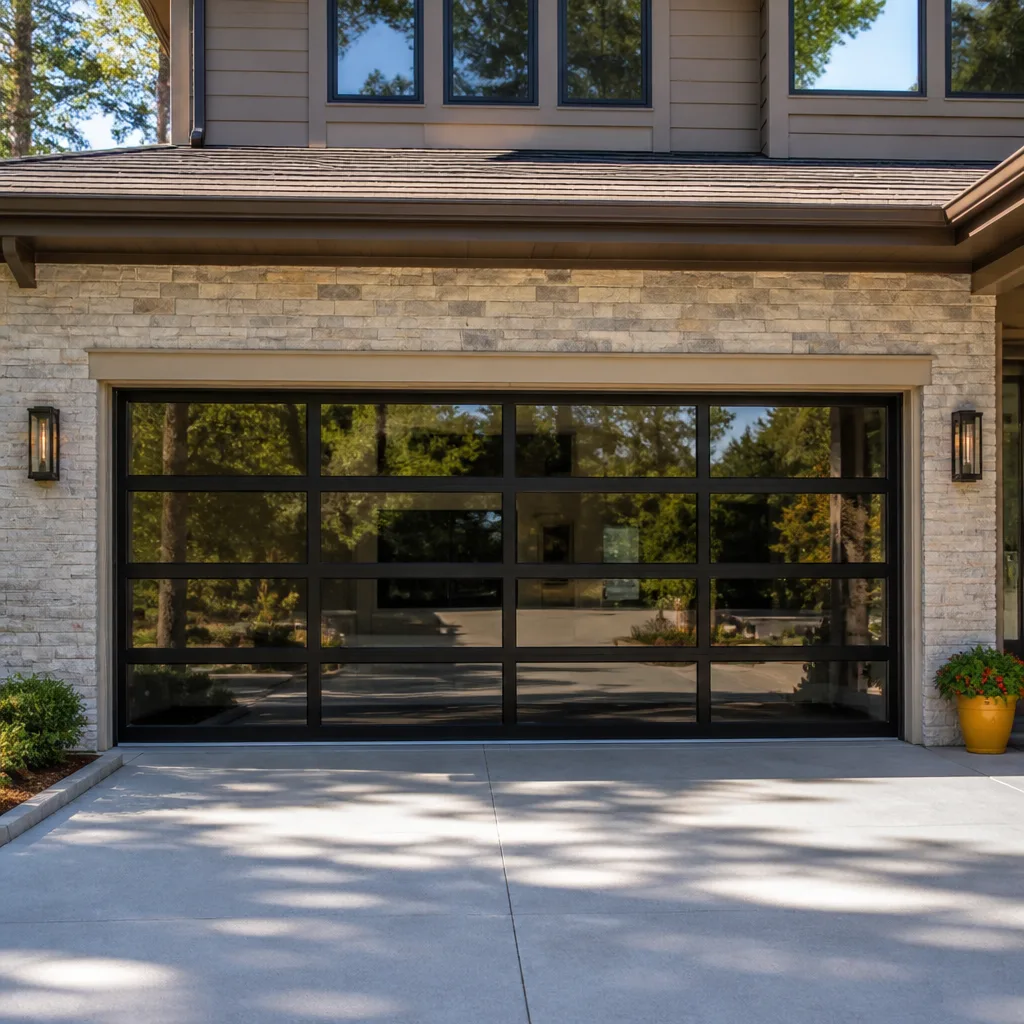 Full-view glass
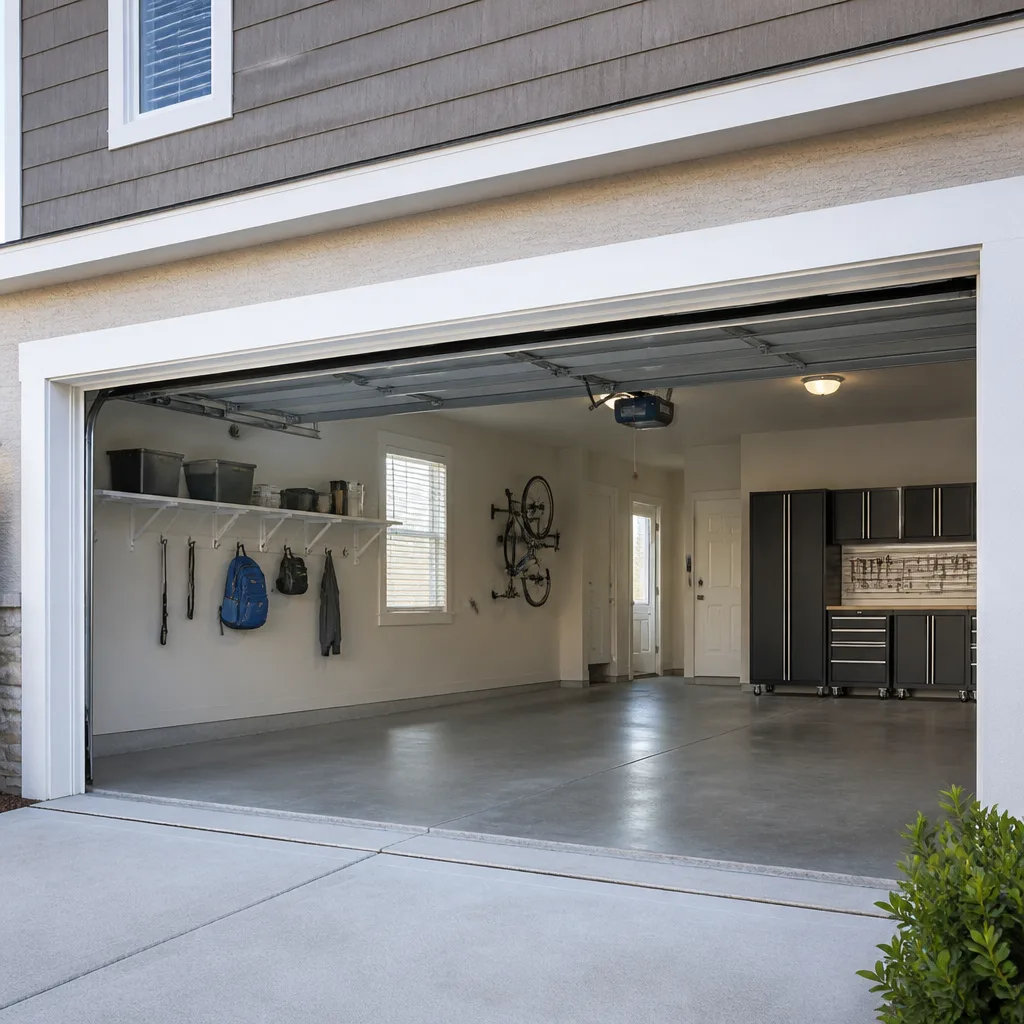 LiftMaster openers
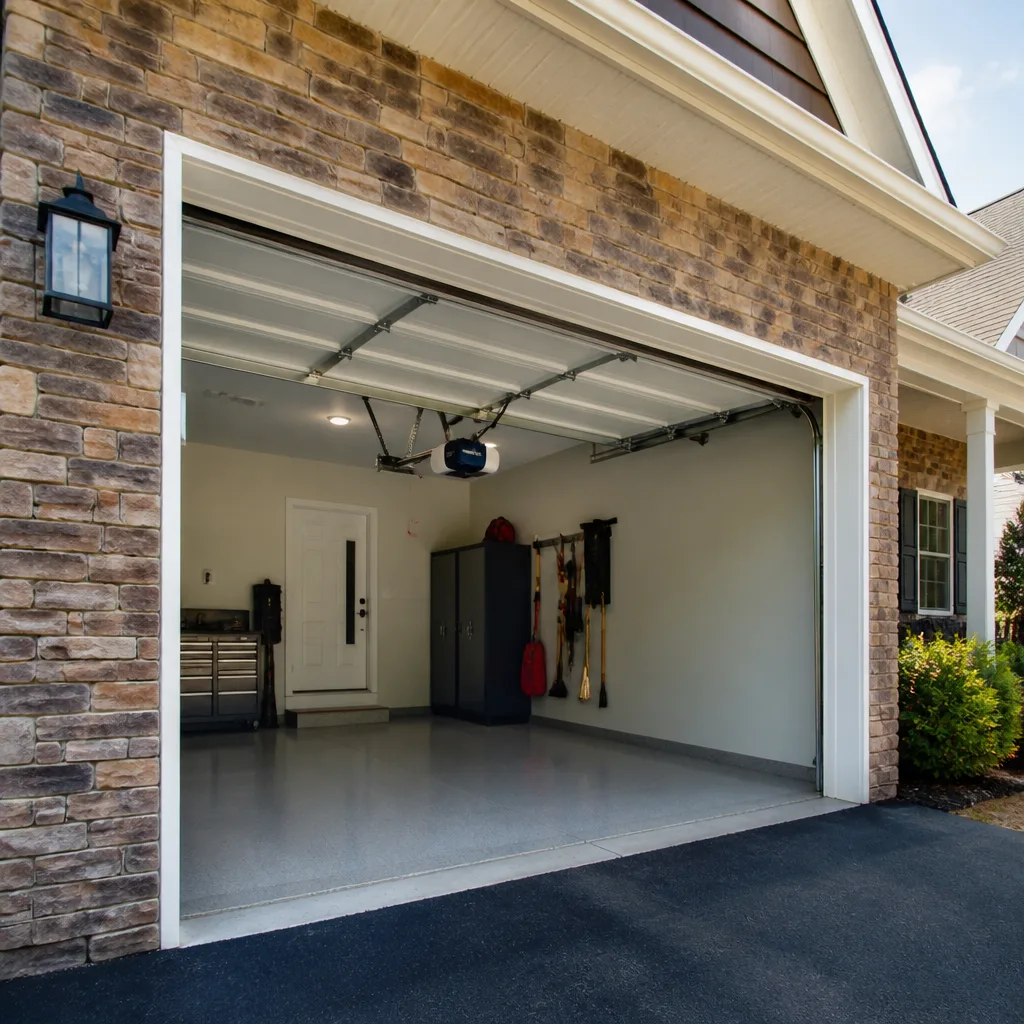 Chamberlain openers
Full 25-point door and opener safety check with every visit - springs, cables, rollers, tracks, and your LiftMaster or Chamberlain opener included
You get a price before we start. It does not change when the pro arrives.
Get your free estimateGarage Door Repair Maintenance Checklist for Raleigh Homeowners
Most garage door advice tells you to check your springs, rollers, and cables once a year and call it done. That’s not wrong, but it’s not useful either. The doors we see across Raleigh don’t fail in a random order. They fail in a fairly predictable one, and the timing is shaped by the long humid stretch from June through September. Springs tend to give out first, rollers next, cable fraying after that. If you know the sequence, you can catch each stage early instead of waiting for something to snap. This guide walks through the checklist in priority order, explains what each symptom actually means in Raleigh’s climate, and draws a clear line between what you can safely check yourself and what needs a technician.
Quick Answer
A garage door maintenance checklist for Raleigh should prioritize, in this order: spring condition and lubrication, roller wear, cable fraying, balance and travel-limit testing, and auto-reverse safety testing. The single highest-value habit is lubricating springs and hinges before the humid season peaks, because heat plus moisture accelerates metal fatigue faster than any other factor here. Check monthly in summer, quarterly the rest of the year, and call a technician the moment you see a gap in a spring, a flattened roller, or a frayed cable.
Styles & brands we work with
- Raised-panel steel
- Carriage house
- Modern flush
- Full-view glass
- LiftMaster openers
- Chamberlain openers
Table of Contents
- Why the Order of This Checklist Matters in Raleigh
- Stage One: Springs (The Highest-Risk Item)
- Stage Two: Rollers and Hinges
- Stage Three: Cables and Drums
- Which Lubricants Actually Work in Raleigh Humidity
- How to Test Balance, Travel Limits, and Auto-Reverse Without Tools
- Seasonal Checkpoints Tied to Raleigh’s Real Calendar
- Your Opener Is the Brain of the System
- The Line Between DIY and a Technician
Why the Order of This Checklist Matters in Raleigh
Garage doors fail in a sequence, not all at once. Understanding that sequence is the difference between a $340 repair and a $700 one, because a worn component left alone damages the parts next to it. In Raleigh, the sequence runs a little differently than in drier climates, and it’s worth knowing why.
Raleigh sits in a humid subtropical band. The stretch from June through September brings sustained heat combined with high moisture. That combination does two things to a garage door: it thins lubricant film faster than dry heat does, and it drives moisture into every unsealed surface. Springs, which are under constant tension, are the first to show the strain. Once a spring weakens, it transfers extra load to the opener and the rollers. Once rollers flatten, the door tracks slightly off-center, and that lateral movement is what eventually frays cables.
So the sequence looks like this:
- Springs lose tension or develop surface corrosion first.
- Rollers flatten and develop flat spots under the added load.
- Cables begin to fray from the misalignment that follows.
- The opener works harder to compensate, and its motor or gear assembly wears faster.
If you check in that order, you catch each stage while it’s still cheap to fix. If you start at the bottom of the list, you’re already replacing parts that the earlier stages damaged. That’s why we build every diagnostic this way, and why Orchard Garage Door Repair treats the checklist as a diagnostic tool rather than a chore list.
Stage One: Springs (The Highest-Risk Item)
Springs are the first thing to check and the last thing to touch. A garage door spring stores enough energy to cause serious injury, and both torsion springs (the coiled ones above the door) and extension springs (the ones running alongside the tracks) are under load at all times. Do not attempt to adjust, remove, or replace a spring yourself. The check you can do safely is visual and auditory only.
What to look for:
- A visible gap in a torsion spring is a sign of a broken spring. The door may still open partway, but the spring has failed.
- Rust or pitting on the coils, which is common in Raleigh’s humid months because springs sit in an unsealed garage that traps moisture.
- Uneven tension between two springs on a double-spring door. One side may look more compressed than the other.
- A loud bang from the garage, followed by a door that won’t lift. That’s the sound of a spring letting go, and it’s less alarming than a door that fails slowly.
If any of those show up, stop using the opener and call a technician. Continuing to run a door on a broken spring puts the load onto the opener and cables, and that’s where secondary damage starts. In our experience across Raleigh, the springs that fail early are usually springs that went un lubricated through a wet summer. A $6 can of proper lubricant applied in May costs far less than a spring replacement in August.
Stage Two: Rollers and Hinges
Once the springs are sound, look at the rollers. Rollers are the small wheels that ride inside the track, and they’re the second-most-common wear item on a Raleigh door. The check is simple: with the door closed, look at each roller and feel the track.
- Open the door and stop it at eye level.
- Look at each roller. A good nylon roller is smooth and round. A worn one has flat spots or a visible wobble.
- Run a finger along the inside of the track. Grit, rust, or a rough texture means the rollers are dragging.
- Listen while the door runs. Squealing at the hinges or a grinding sound at the track is a roller or hinge issue, not a motor issue.
Hinges wear more slowly, but the ones between door panels take the most motion. In Raleigh’s humidity, the metal pivot points inside the hinges dry out and start to squeal. That squeal is your early warning that the hinge pins are running dry, and lubricating them early prevents the flat-spot wear that follows. If a hinge is visibly bent or the door panel has started to separate at the hinge line, that’s a technician call, not a lubricant fix.
Stage Three: Cables and Drums
Cables are the quiet failure. They fray slowly, they rarely make noise, and by the time most homeowners notice, the cable is down to a few strands. A frayed cable can snap under load, and a snapped cable lets the door drop unevenly, which can damage the track and panels.
What to check, with the door closed:
- Fraying along the length of the cable, especially where it wraps around the drum at the top corner of the door.
- Kinks or birdcaging, where the strands start to separate and twist outward.
- Slack on either side. A cable that hangs loose when the door is down is a sign of a drum or spring problem.
- Rust on the cable and drum. Raleigh’s moisture drives this faster than most homeowners expect.
Cable work is a technician job. The cables are under tension from the springs, and releasing them without the proper tools and technique is genuinely dangerous. The safe homeowner action is to spot the fraying early and schedule a repair before it becomes a snap. If you see any of the above, treat the door as out of service until it’s checked.
Which Lubricants Actually Work in Raleigh Humidity
Most garage door lubricant advice is written for dry climates, and it doesn’t hold up here. The wrong product is worse than no product, because some lubricants attract grit and turn into an abrasive paste that wears parts faster. Here’s what works and what doesn’t in Raleigh’s conditions.
Use these:
- Silicone spray on springs, hinges, and roller bearings. It dries to a film that doesn’t hold grit, and it handles moisture well.
- White lithium grease on the torsion spring coils and the drum bearing, applied sparingly. It stays put through the humid months.
- Dry PTFE lubricant on the track and rollers if you want a non-messy option for high-moisture months.
Avoid these:
- WD-40 as a long-term lubricant. It’s a solvent, not a lasting film, and it strips the lubricant that’s already there. It’s fine for freeing a stuck bolt, not for a spring.
- Heavy engine oil or motor grease. In Raleigh’s heat it thins and drips, and in the humidity it collects grit like a magnet.
- Graphite powder in an unsealed garage. It migrates, stains, and offers little protection against moisture.
Apply lubricant in late May, before the humid stretch peaks, and again in early October as the air dries out. Apply with the door closed, and wipe off excess so it doesn’t attract dust. Two light applications a year do more for a Raleigh door than monthly heavy coats, and they’re the cheapest part of this whole checklist.
How to Test Balance, Travel Limits, and Auto-Reverse Without Tools
You can test the three most important safety functions on your door using nothing but the door itself and a small object. These tests tell you whether the door is mechanically sound and whether the opener’s safety systems are working. Do them monthly in the humid season, quarterly otherwise.
Balance test:
- Close the door, then pull the manual release cord to disconnect the opener.
- Lift the door by hand to about waist height and let go.
- A balanced door stays put. A door that drifts down has weak springs. A door that drops fast has a spring or cable problem.
- Reconnect the opener by running it until it re-engages the carriage.
Travel limit test:
- Run the door fully up and fully down.
- Check that it stops flush with the floor and fully at the top, without straining.
- If it stops short or reverses before the floor, the travel limits need adjusting. That’s a small adjustment on most openers, but it’s easier to have a technician set it once than to guess at the numbers.
Auto-reverse test:
- Place a roll of paper towels flat on the floor in the door’s path.
- Close the door with the opener. It should reverse on contact with the object.
- If the door presses down and stops without reversing, the safety system needs attention. Do this test before you rely on the door around children or pets.
These tests are safe because you’re not touching springs or cables. They’re also the fastest way to find a problem before it becomes a breakdown, and they work on the Clopay, Amarr, and Wayne Dalton doors we see across Raleigh as well as any other brand.
Seasonal Checkpoints Tied to Raleigh’s Real Calendar
Generic “check your door in spring and fall” advice misses the real weather triggers in Raleigh. The checkpoints below are tied to what actually happens in the Triangle, so you’re working ahead of the season instead of reacting to it.
- Late May, before the humid stretch: lubricate springs, hinges, and rollers. This is the single most important maintenance action of the year here, because it sets up the door to survive June through September.
- Mid-July, peak humidity: re-check for rust on springs and cables, and run the balance and auto-reverse tests. This is when the moisture load is highest.
- Early October, as the air dries: second lubrication pass, and a full visual check on rollers and cables. The transition out of humid season is when you catch wear that accumulated over the summer.
- Late November, before the first cold snap: test the opener’s force settings and confirm the door closes fully. Cold mornings are when a marginal opener shows its weakness.
- February, mid-winter: a light inspection pass. The dry winter months are low-risk, but they’re a good time to catch anything the summer left behind.
If you can only do one thing this year, make it the late-May lubrication and a spring inspection. That single action prevents more premature failures in Raleigh than everything else on this list combined.
Your Opener Is the Brain of the System
The opener is the part most homeowners think about last, and it’s the part that ties the whole system together. When springs weaken or rollers flatten, the opener is the component that works harder to compensate. That’s why a mechanical checklist should always end with the opener, not start with it.
Things to watch on the opener itself:
- Straining or slow operation. If the door moves slower than it used to, the opener is working against resistance from the door, not failing on its own.
- Reversing for no reason. This is often a safety-sensor alignment issue, not a motor problem.
- Grinding or clicking at the motor. That can be a worn gear or a failing drive assembly.
- Remote or keypad range dropping. Usually the battery, sometimes the logic board.
Opener repair is a specialized service, not a secondary add-on. We treat it that way because most modern garage door calls in Raleigh involve the opener in some way, whether it’s a LiftMaster, Chamberlain, Genie, or Craftsman unit. If the opener is straining because the door is out of balance, fixing the opener alone treats the symptom, not the cause. That’s why the diagnostic goes door-first, opener-second.
The Line Between DIY and a Technician
Homeowners can safely check a lot on a garage door. They can safely check almost nothing that involves springs or cables under tension. The line is not about difficulty. It’s about stored energy.
Safe for homeowners:
- Visual inspection of springs, rollers, cables, and hinges.
- Lubrication of springs, hinges, and roller bearings.
- Balance, travel-limit, and auto-reverse testing.
- Cleaning the track and checking for debris.
- Replacing remote batteries and re-pairing remotes.
Technician work:
- Any spring adjustment or replacement.
- Any cable, drum, or bottom-bracket work.
- Roller replacement that requires lifting the door or working near the track.
- Track realignment or panel replacement.
- Opener force-limit adjustment, gear replacement, or logic-board work.
The reasoning is simple: springs and cables store enough energy to cause serious injury, and the tools to release them safely aren’t in most home garages. A technician has the winding bars, the training, and the experience to work with that energy. That’s the line, and it’s a safety line, not a sales one.
Common Mistakes to Avoid
- Lubricating with WD-40 and calling it maintenance. WD-40 strips existing lubricant and leaves nothing lasting behind. In Raleigh’s humidity, the spring dries out again within weeks.
- Ignoring a squeal because the door still opens. A squeal is the sound of metal running dry. Left alone, it becomes flat-spotted rollers and a strained opener within a season.
- Adjusting springs yourself after watching a video. Springs are under constant tension. A slip can cause serious injury, and the door can still fail after a home adjustment.
- Skipping the balance test because the opener works. A working opener can mask a weakening spring for months, and the extra load wears the motor faster than the door would on its own.
- Using heavy grease on the track. Raleigh’s heat thins it and the humidity turns it into a grit trap. Track lubricant should be light, not heavy.
- Waiting for a loud bang before a spring inspection. Springs usually fail slowly, with rust or a gap showing up weeks before the break. A visual check catches it.
- Assuming a newer door doesn’t need a checklist. A Clopay or Amarr door installed recently still sits in the same humid garage and faces the same moisture load. New doors need lubrication just as much.
See the difference
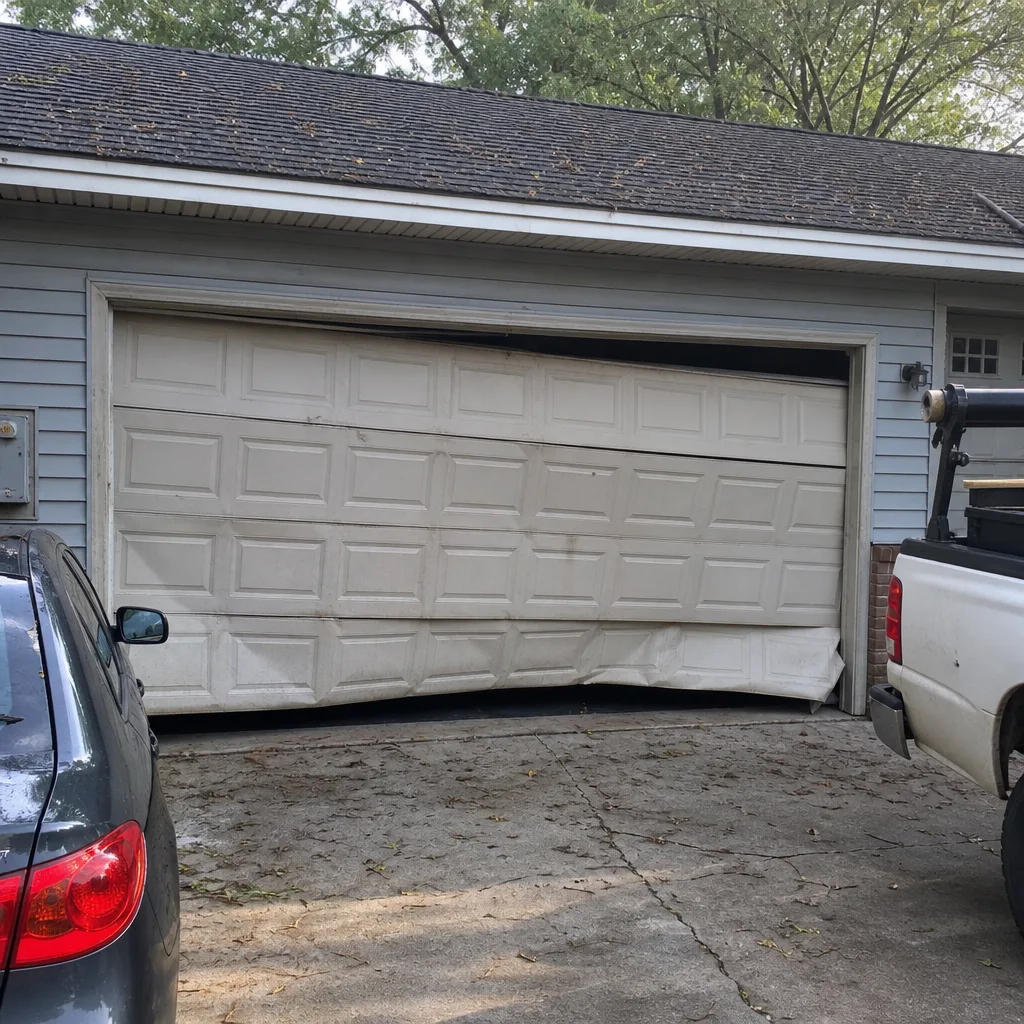 Before
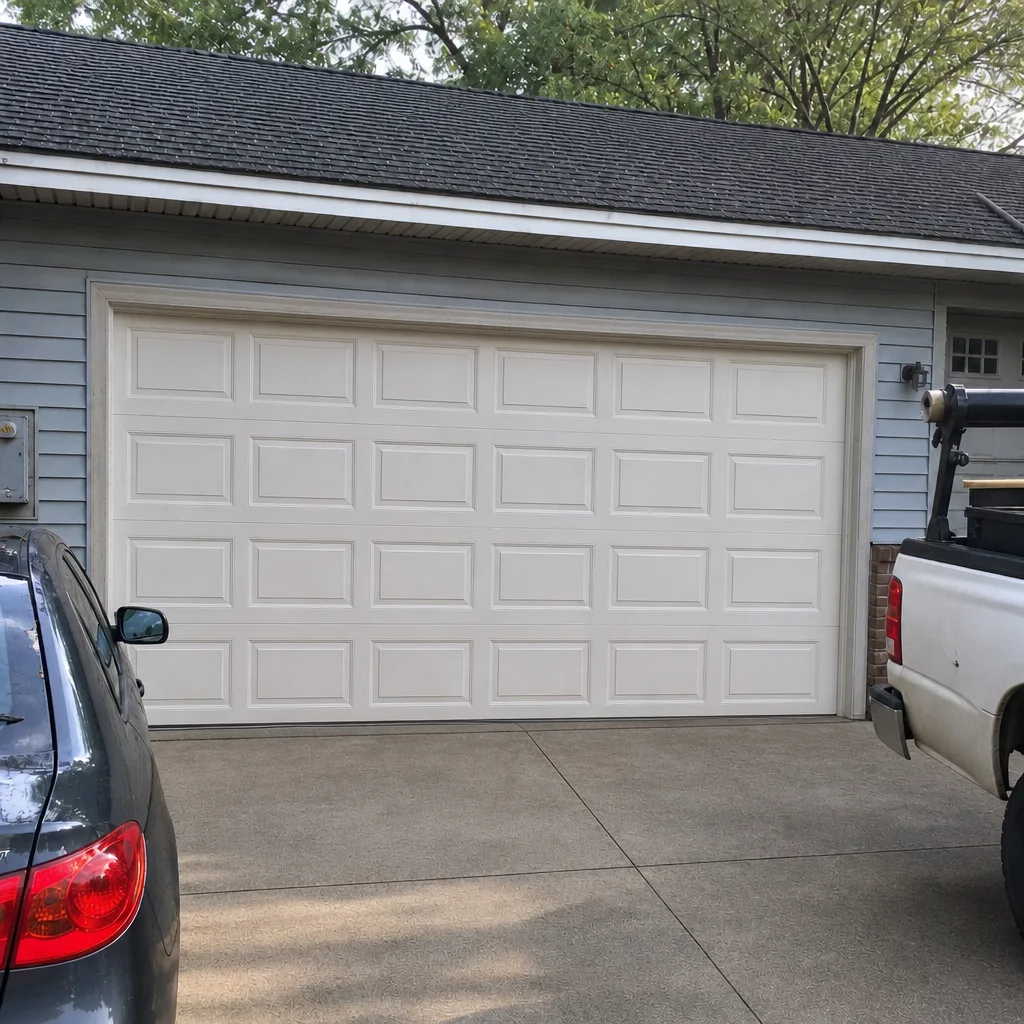 After
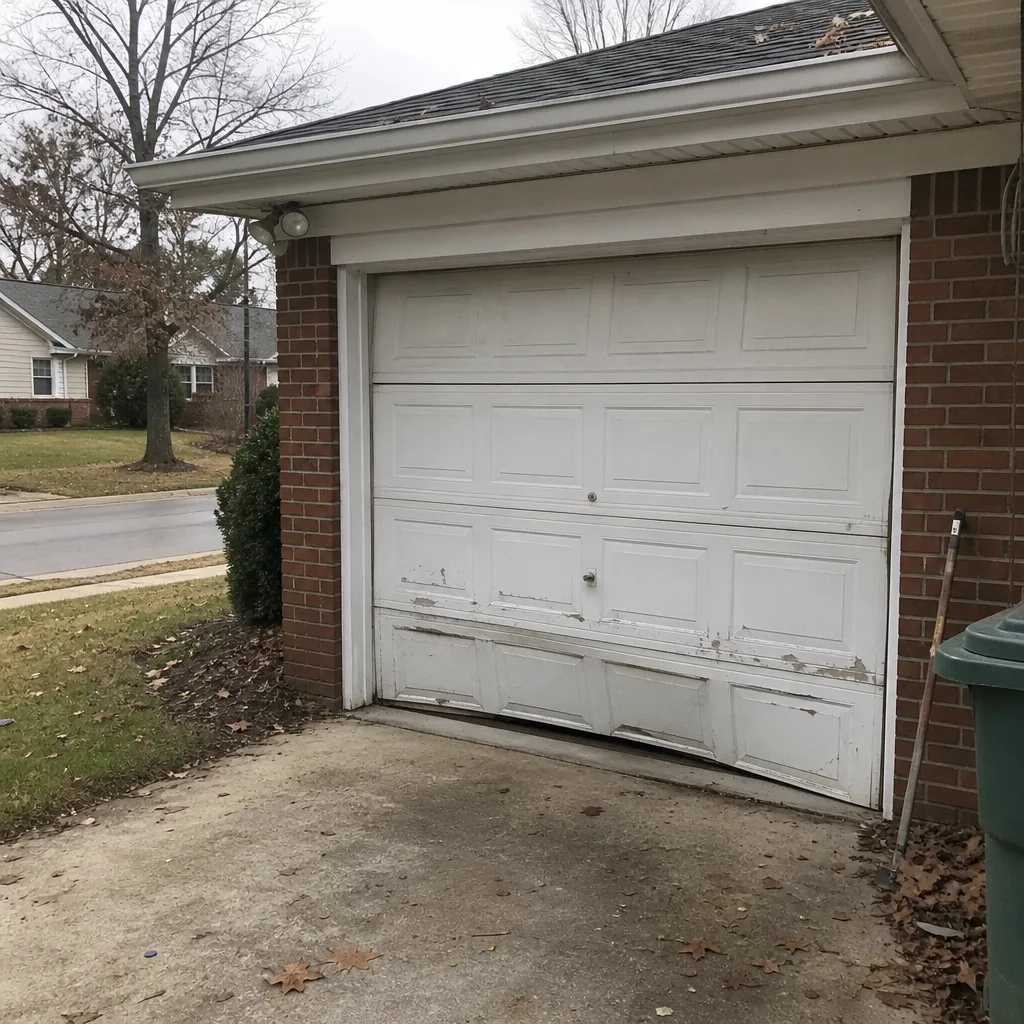 Before
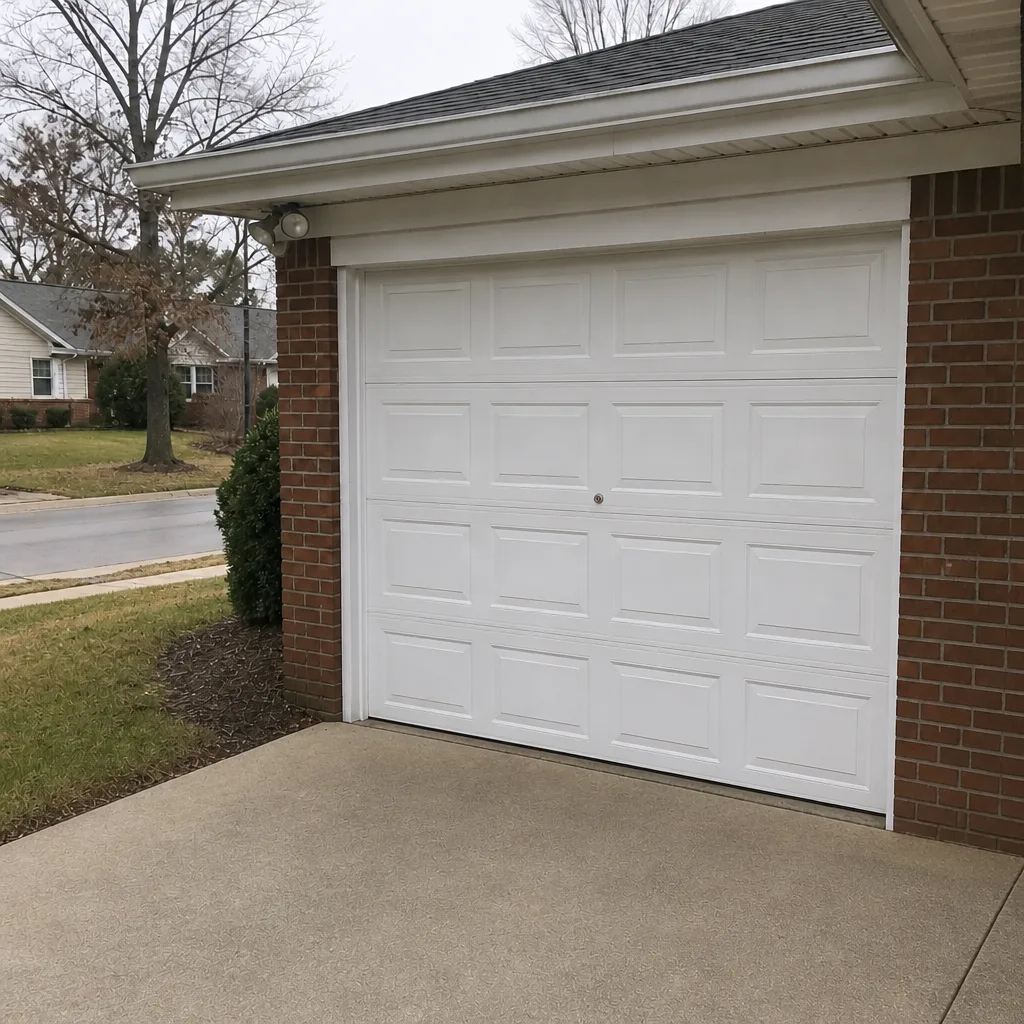 After
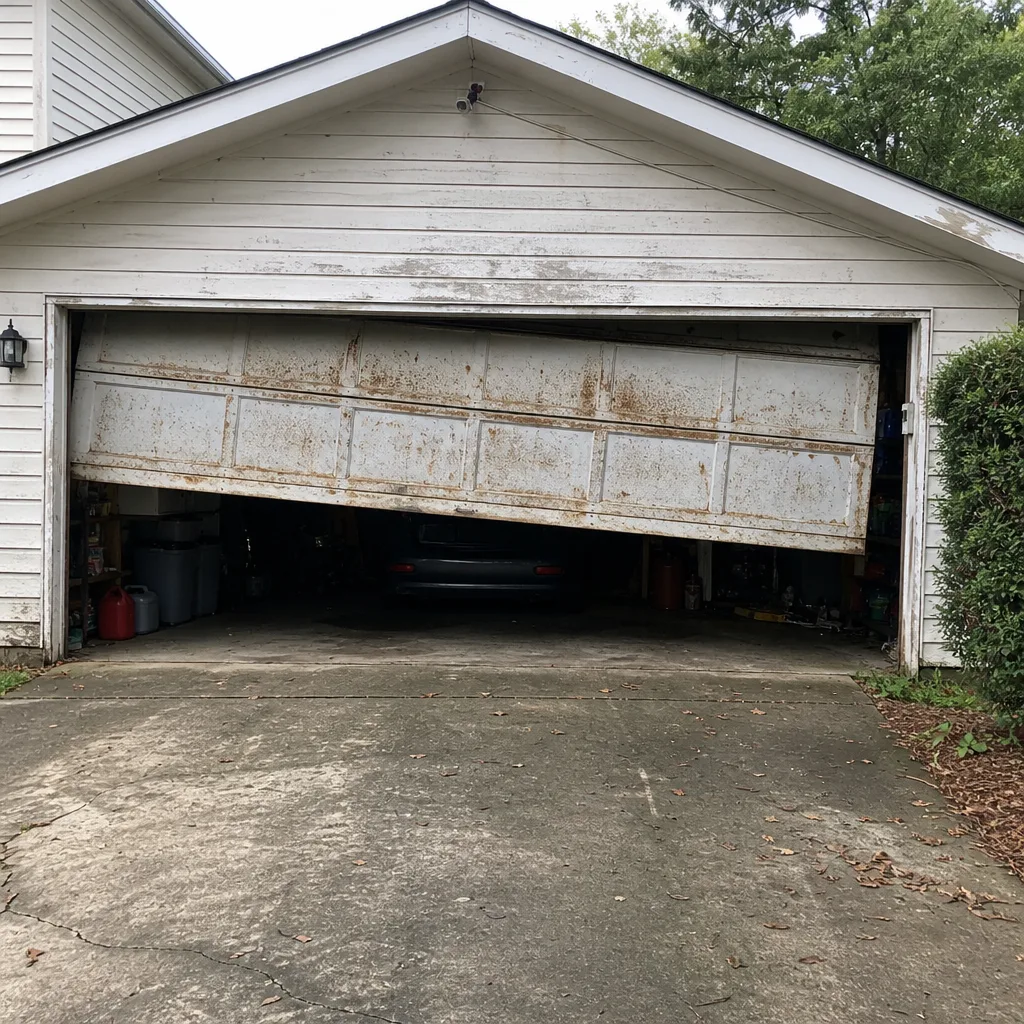 Before
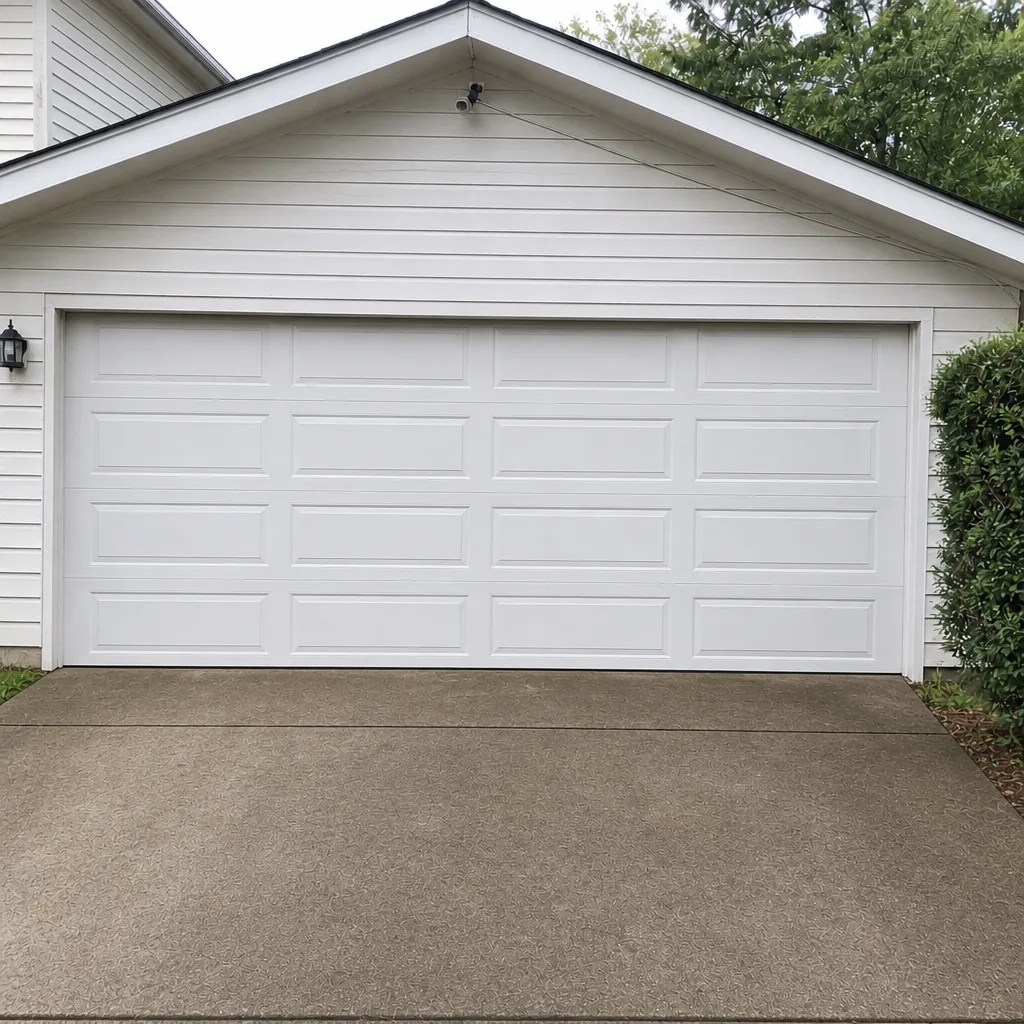 After
When to Call a Professional
Call a technician if you see a gap in a torsion spring, rust that has eaten into the coils, a frayed or kinked cable, a door that drops on its own during the balance test, or an opener that reverses for no apparent reason. Also call if the door has come off its track, if a panel is bent at the hinge line, or if the auto-reverse safety test fails. Those are the situations where continuing to run the door causes secondary damage. For garage door repair in Raleigh, Orchard Garage Door Repair offers free estimates, and the price is set by the written estimate before any work starts. Call (866) 942-6232. We answer 24/7. Fast dispatch from 7am to 7pm, Sunday through Friday. Our technicians have up to experience and work across eight major brands, so the diagnosis matches the equipment you actually own.
Frequently Asked Questions
Twice a year is the right rhythm here: late May before the humid stretch and early October as it dries out. Raleigh’s humidity thins lubricant film faster than drier climates do, so a spring, hinge, and roller lubrication pass at those two points protects the door through the worst months. If your door squeals between passes, add a light spot application on the hinges. Call (866) 942-6232 for an exact quote on a full tune-up; estimates are free.
Rust or pitting on the coils is usually the first visible sign, followed by a door that feels heavier or drifts down during the balance test. A visible gap in the spring means it has already broken. In Raleigh, springs that skip the late-May lubrication tend to show rust earlier because of the moisture load. Call (866) 942-6232 if you spot any of these; estimates are free.
Some homeowners replace the lower rollers without incident, but any roller that requires lifting the door or working near the track involves spring tension and should go to a technician. The safe DIY action is to lubricate roller bearings and check for flat spots. For replacement, call (866) 942-6232; estimates are free and the written estimate sets the price.
Place a roll of paper towels flat in the door’s path and close the door with the opener. The door should reverse on contact with the object. If it presses down without reversing, the safety system needs attention before you rely on the door around children or pets. A technician can check the sensors and force limits; call (866) 942-6232 for a free estimate.
Summer heat and humidity make the door itself harder to move, and the opener works harder to compensate. If the opener strains in July but runs fine in November, the issue is usually a door that needs lubrication and a spring that’s lost some tension, not a failing motor. Diagnostic garage door opener repair in Raleigh starts with the door, then moves to the opener. Call (866) 942-6232 for a free estimate.
Repair is usually the right call if the panels, track, and springs are sound and the problem is isolated to one or two components. Replacement makes more sense if the door has repeated spring failures, bent panels, or a track that won’t hold alignment. We’ll tell you which one actually makes sense for your door before any work starts, and the written estimate sets the price. Call (866) 942-6232 for a free estimate in Raleigh.
The Bottom Line
A garage door maintenance checklist works when it follows the order your door actually degrades. In Raleigh, that order is springs first, then rollers, then cables, because the humid stretch from June through September accelerates metal fatigue. Lubricate in late May, test balance and auto-reverse monthly through the summer, and stop as soon as you see a gap in a spring or a frayed cable. The checks you can do safely take about fifteen minutes. The work that involves springs and cables belongs to a technician, and that line is about stored energy, not difficulty. Follow the order, and you’ll catch problems while they’re still cheap. Orchard Garage Door Repair handles repair, opener work, and full installation under one name, across the brands you already own.
Ready to get your door checked or schedule a tune-up? Call Orchard Garage Door Repair at (866) 942-6232 for a free estimate. We answer 24/7. Fast dispatch from 7am to 7pm, Sunday through Friday. Closed Saturday. The price is quoted and agreed before any work starts.
Written by the team at Orchard Garage Door Repair.